GAF Commercial Roofing Systems in Bellingham, WA
Installing and repairing GAF commercial roof systems in Bellingham, WA: single-ply, bituminous and coating assemblies, detailed for wind and wet seasons.
GAF Commercial Roofing Systems in Bellingham, WA
Installing and repairing GAF commercial roof systems in Bellingham, WA: single-ply, bituminous and coating assemblies, detailed for wind and wet seasons.
Roofing Manufacturers
GAF Commercial Roofing Systems in Bellingham
A spec sheet that names GAF tells us one thing before anything else: the whole assembly is meant to come from one manufacturer. Insulation, cover board, membrane, flashing and accessories each get a line, and each line has to match. In Bellingham, WA, where wet decks and gusty edges punish mismatched parts, that matching is where a submittal succeeds or stalls.
GAF is a large North American roofing manufacturer with commercial lines that span single-ply membranes, bituminous systems and liquid-applied coatings. We install, repair and maintain roofs built from those system types. The way those systems behave, what their details demand and how the schedule runs on a Bellingham building are what we plan around.
Overview
GAF Commercial Roofing Systems
The system types
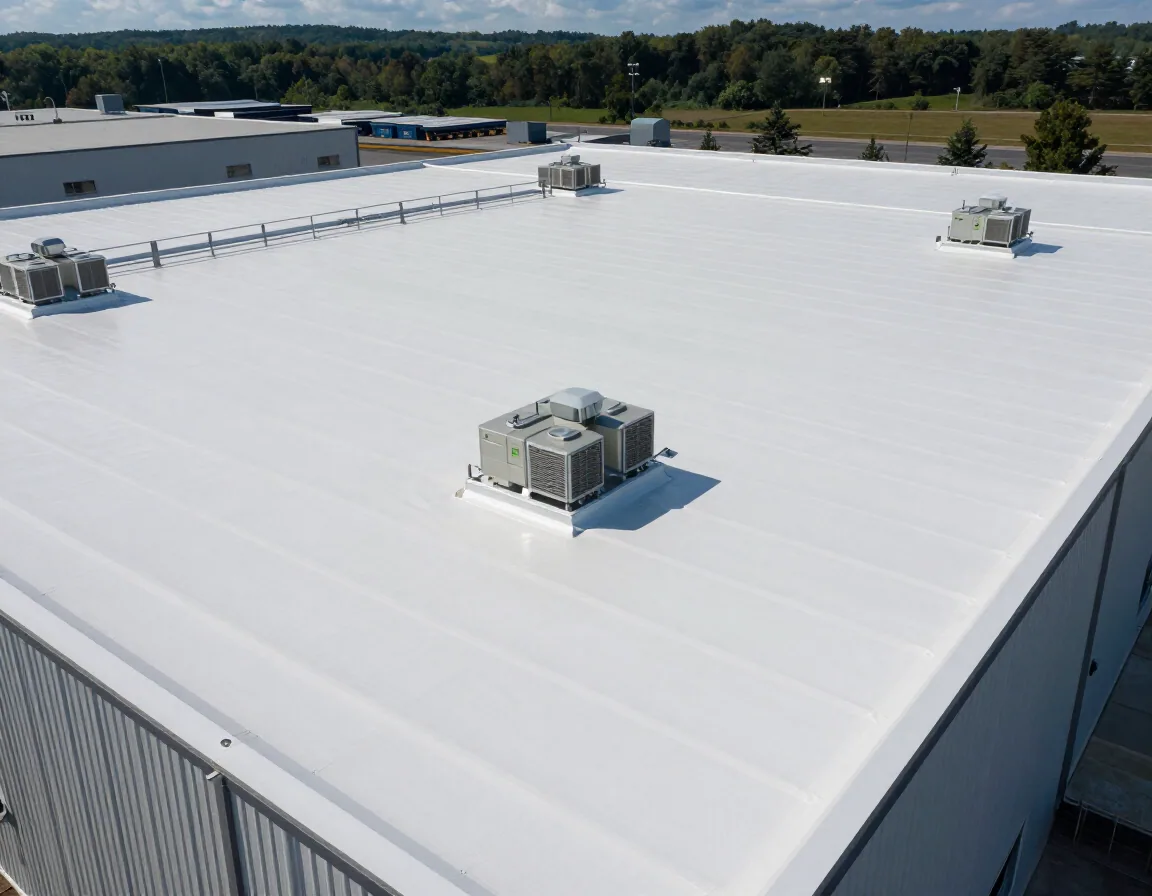
A manufacturer with several system categories lets the design team choose by building, not by habit. Single-ply sheets suit broad low-slope roofs with many penetrations. Bituminous systems suit roofs that see foot traffic and need layers. Coatings suit sound roofs that need more life without a tear-off.
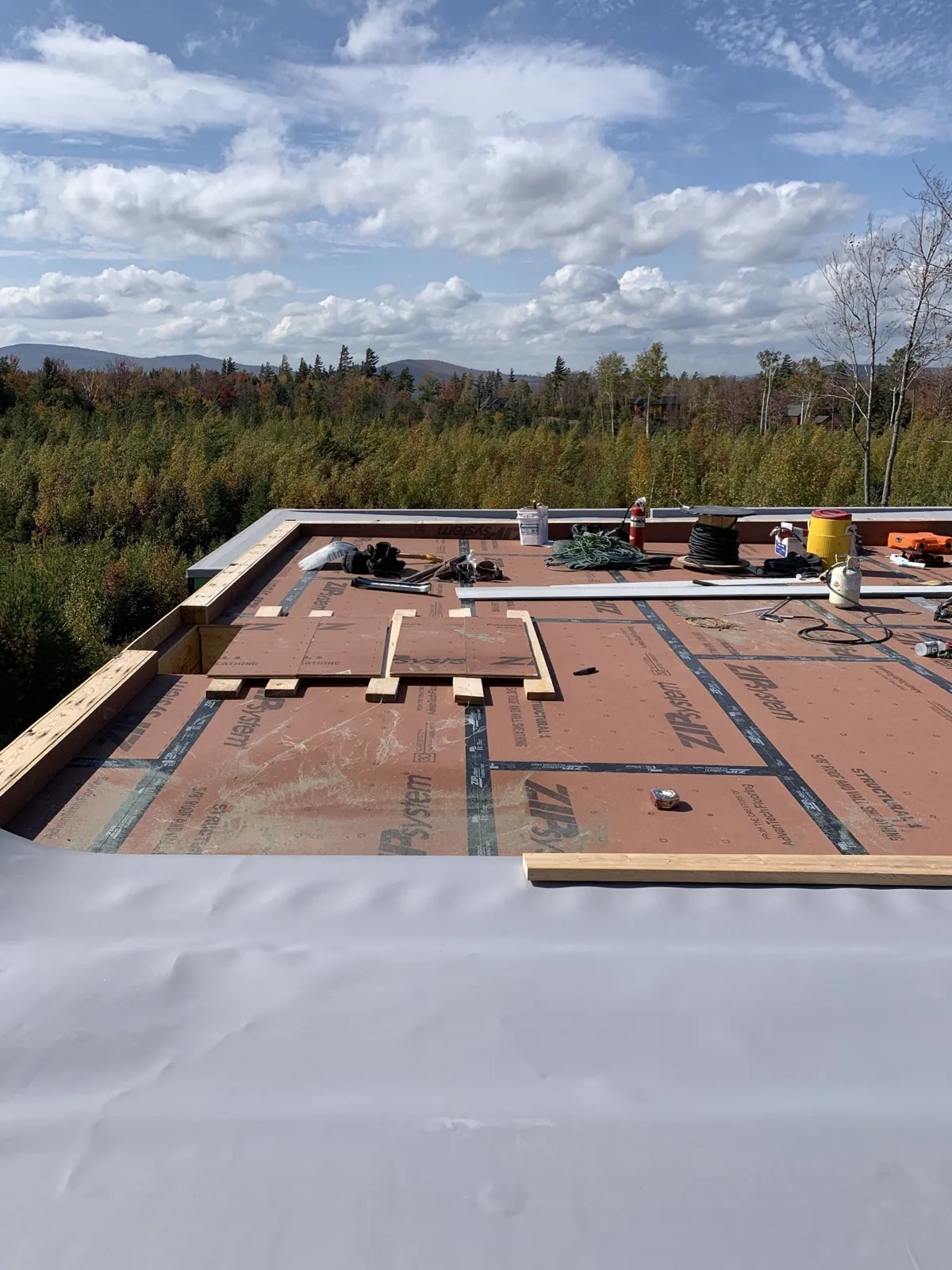
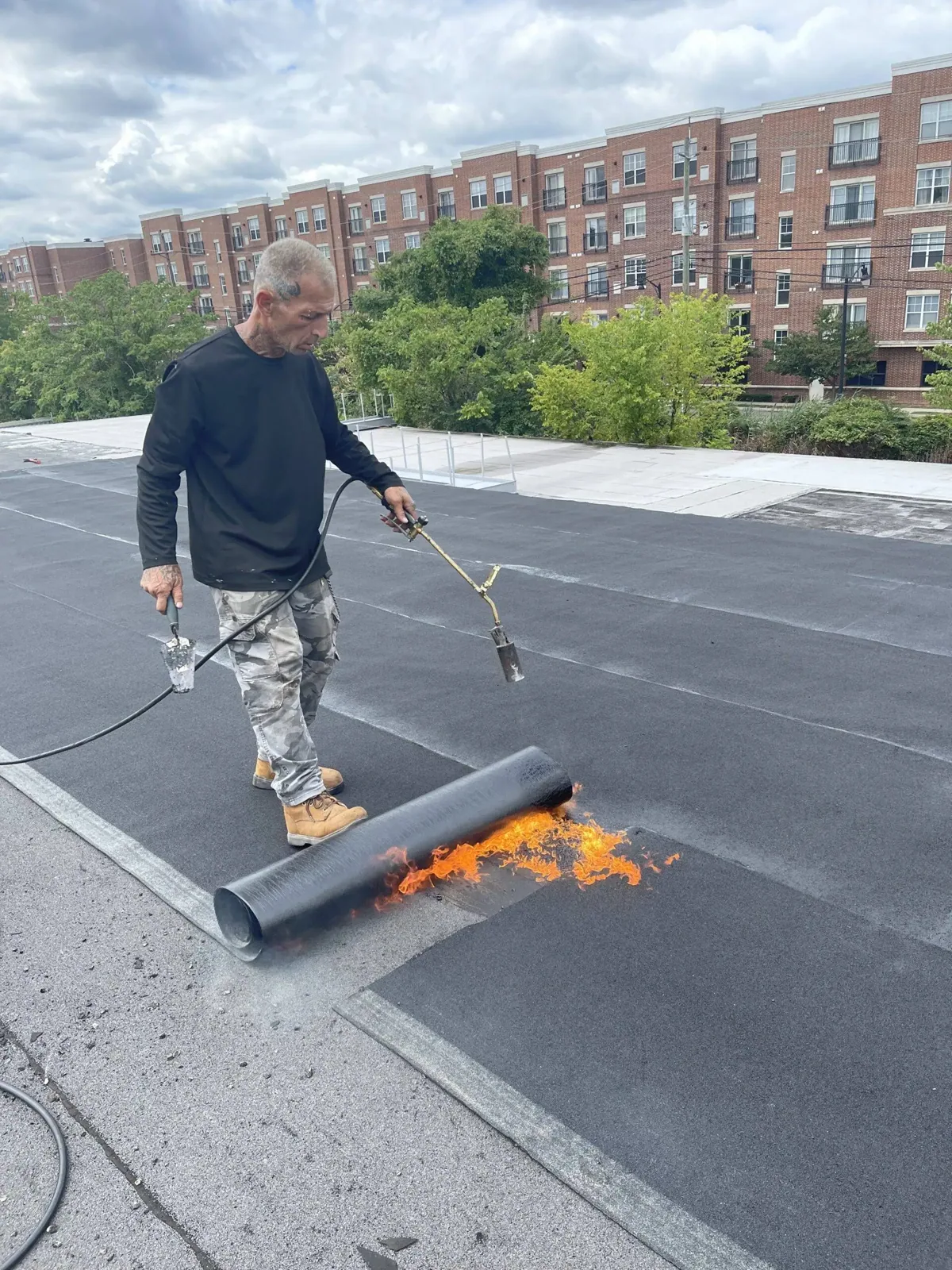
Each category has its own install craft. A TPO sheet is welded with hot air and probed. A modified bitumen system is laid in plies with torch, cold adhesive or self-adhered sheets. A coating system is cleaned, repaired, primed and rolled.
The category decides the crew, the equipment and the weather window. Welding needs dry sheets, torch work needs a fire watch and coatings need a rain-free cure. We plan each before the contract is signed.
Carlisle leans on single-ply, while GAF's mix spans single-ply, bituminous and coating categories. The spread matters on a campus with several roof types, since one maker's catalog may cover them all while another's does not. Our Johns Manville work follows the same logic with its own mix.
The choice of category follows the building. A hospital with rooftop air handlers wants a tough sheet and clean details. A shop with a tight budget may want a coating. A school with a summer window wants a system that can finish in weeks.
One-source assemblies
An assembly is the full stack from deck to surface. Many manufacturers test and rate assemblies as a unit, with a stated uplift performance and fire classification. Swapping one component can leave the rating behind.
That is why submittals matter. Before ordering, we confirm the insulation thickness, the cover board type, the fastener pattern and the membrane attachment against the listed assembly. If a design calls for parts from different makers, the design team confirms the combination is acceptable.
Fastener density follows the wind zone. Edges and corners need more fasteners than the field. The March 2016 gusts of 67 mph and the November 2024 bomb cyclone, with easterly winds through Sudden Valley, show why edge density gets reviewed line by line.
Insulation is part of the assembly and part of the code. When a roof is replaced, the insulation levels of the 2021 state energy code apply, as they have since mid-March 2024. Thicker boards push every curb, wall flashing and drain higher, and manufacturer details for those heights have to be checked before ordering.
Cover board choice follows the membrane. Some single-ply systems are adhered to a cover board, others are fastened through it. Bituminous systems often start with a base sheet over a board. Each pairing has a listed fastener pattern, and the submittal confirms it.
Installing in a wet market
Rain in Bellingham comes to about 34.8 inches a year, the wet peak is November and the dry peak is July, and a sun total of only about 1,866 hours slows deck drying. Every system type here lives and dies by dry-in days.
We aim major installs at the dry months and size each day's work to what can be closed. Open edges get temporary seals. Insulation stays covered until the membrane goes over it, because wet board wrecks the assembly. A lost morning can become a lost day, and we put that in the calendar.
Cold nights add risk to adhesives and coatings. Welded sheets tolerate cooler air better than adhered ones, though the deck must be dry. We read the forecast daily and choose the day's task to fit.
Material handling matters too. Rolls stay on pallets under tarps, adhesives stay in a warm, dry place and insulation is staged only as far ahead as the crew can cover. A pallet of wet board or a cold can of adhesive causes a failure that appears months later.
Repairs on installed roofs
A repair on a roof that already carries a manufacturer's system follows that system's methods. Single-ply sheets are cleaned and patched with compatible material. Bituminous roofs are repaired with matched sheets and adhesive. Coated roofs are cleaned and recoated over repaired areas.
Warranty status shapes the route. Roofs under manufacturer coverage need notice before major repairs, and we log every visit with photos. The warranty file for each building tracks those conditions.
On a repair, the job is to use methods the system allows, record the work and leave the roof dry.
Identification comes first on any repair. We read the membrane type by feel, thickness and seam style, and confirm with a small sample when needed. A wrong guess leads to the wrong patch, and a wrong patch lets water in at the edge. Photos of the sample go in the file.
Moisture checks follow. A repaired seam on wet insulation will fail again, so we scan or probe before we patch. Small wet zones are cut out and replaced as part of the repair scope.
Where these systems show up
Commercial roofs across the region use system types like these: warehouses and distribution buildings in the Port's industrial parks, retail centers around Bellis Fair, schools and college buildings at Western Washington University and Whatcom Community College, and healthcare roofs near PeaceHealth St. Joseph.
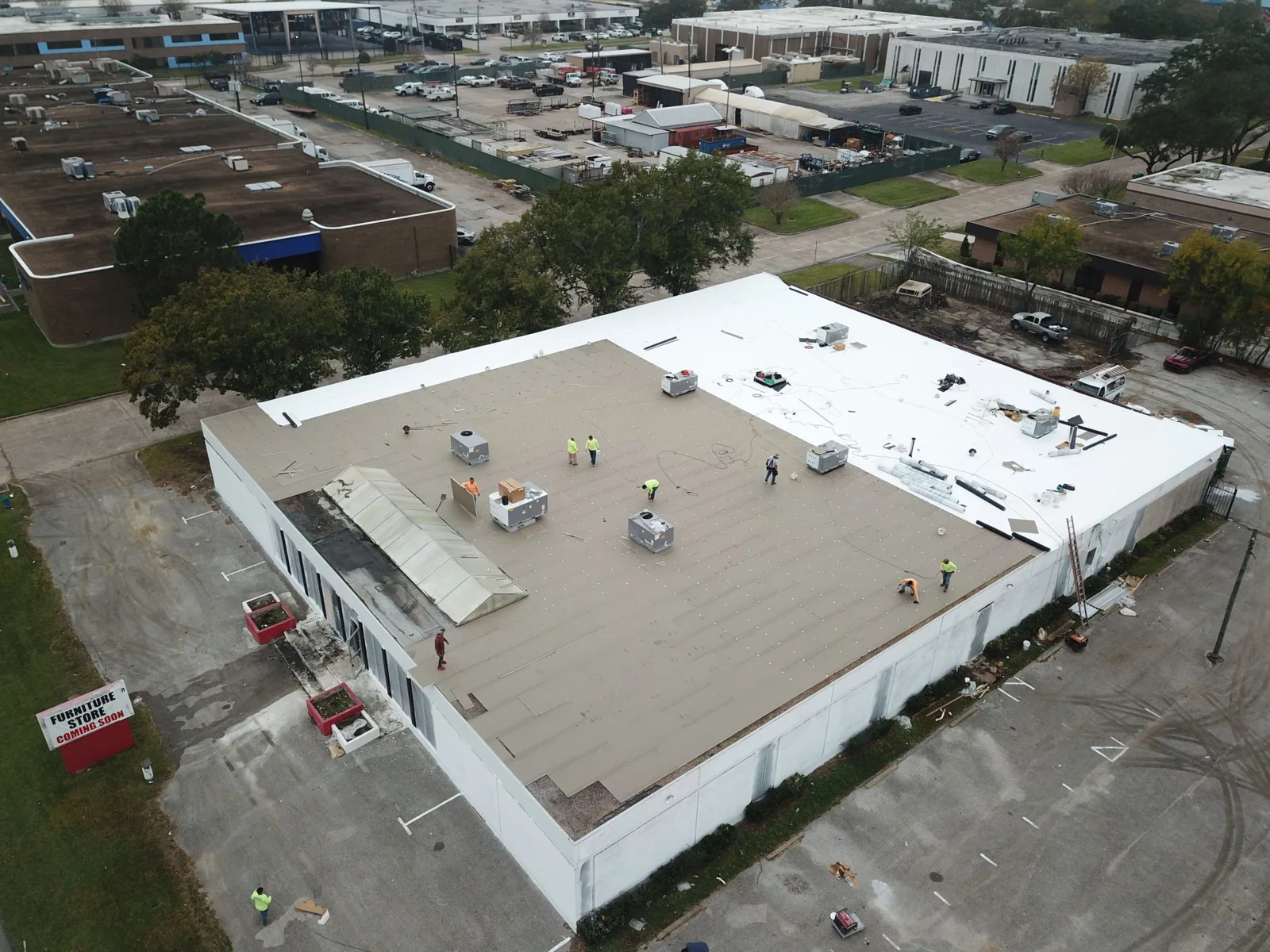
Industrial buildings in the Airport Industrial Area often carry broad low-slope roofs, which suit single-ply sheets. Waterfront roofs along Marine Drive call for stainless fasteners and sealed edges. Institutional roofs with heavy rooftop traffic call for thicker sheets or layered systems.
When the owner has several brands on different buildings, a multi-site program keeps the repair standard consistent across them.
Coastal sites such as Blaine add salt exposure, which affects fastener and edge metal choices. The system type stays the same, and the hardware changes to stainless or coated parts.
Commercial Roofing Questions
Does a manufacturer's name change how the roof is built?
It changes the details and the submittals. Each maker publishes specific flashing, fastening and seam methods for its systems. We follow the published method for the system named in the spec.
Can parts from different makers be mixed?
Sometimes, but the assembly rating and warranty terms may change. The design team confirms the combination before we order, and we flag mismatches in the submittal.
What do you need to quote a repair on an existing system?
A roof photo set, the install date if known and the leak history. If the membrane type is unclear, we take a core or a sample to identify it before quoting.
How does a coating system differ from a new membrane?
A coating restores a sound roof and skips tear-off. A new membrane replaces the surface and often the insulation. Moisture decides which route is open.
How long do materials take to arrive?
Single-ply rolls and accessories usually ship in weeks. Special orders take longer. We place orders early and tie the install date to the delivery.
Send the spec and the submittal list
Send the drawings, the roof spec and the named system. We will price the assembly, the details and the install window as separate lines before the bid closes.