Roofing for Retail and Restaurant Chains in Bellingham, WA
Roof programs for multi-location retail and restaurant brands in Bellingham, WA: grease exhaust, trading-hour scheduling, wind edges and one report per store.
Roofing for Retail and Restaurant Chains in Bellingham, WA
Roof programs for multi-location retail and restaurant brands in Bellingham, WA: grease exhaust, trading-hour scheduling, wind edges and one report per store.
Industries We Serve
Roofing for Retail and Restaurant Chains in Bellingham
The March 2016 gust that reached 67 mph tore stucco from a Bellingham Home Depot storefront. It also put a hole in a house roof. A retail chain reads that as a store-level event with a roof-level cause. Wind finds the edge, the edge lifts, and the loss shows up at the front door. In Bellingham, WA the wet season does the same job slowly. Rain at about 34.8 inches a year, peaking in November, works on every seam and every drain.
A chain wants the same answer at every store. A grade. A repair list with prices. A date. We give it in one report format, so the Bellingham store reads next to the one in any other market.
Landlords face the mirror problem. The property management side of a center decides which repairs reach tenants. A chain that knows the landlord's plan can time its own work. We keep both sides informed.
Overview
Roofing for Retail and Restaurant Chains
Roof work around trading hours
The store is the revenue. The roof job has to leave it open. Customers must not walk under tear-off dust. Deliveries must not meet a lift. A dining room must not smell of adhesive.
We schedule loud and odorous work for early morning or closed hours. Materials stage away from entrances and drive-throughs. Each section closes weather-tight before doors open. Holiday weeks are blacked out by default, and the wet season pushes major work toward July, the driest month. For restaurants, kitchen exhaust fans and make-up air units are covered during the work, and fume-producing steps move away from meal periods. For grocery and big-box stores, receiving hours set the window.
Signage, lighting and holiday decorations bring other trades onto the roof. We log those visits where the store tells us, inspect after major installs and repair any puncture at once. A banner crew should not leave a leak behind.
Grease, exhaust and the restaurant roof
Kitchen exhaust leaves grease on the roof. It softens some membranes. A restaurant roof is graded with the vent locations in mind. PVC and KEE sheets resist grease better than other single-ply options, which is why they come up on a re-roof.
Grease mixed with debris clogs scuppers. The pond sits at the same corner where the fan discharges. We clean those paths on each visit and log every grease-bearing vent in the roof register, so the next crew starts there. Fire safety applies too. Duct and fan discharge stay clear of combustible roof material, and hot work near exhaust runs under permit with a fire watch. The 2021 fire code took hold statewide in mid-March 2024.
Brew pubs in older light-industrial buildings, a pattern that fits the at least 15 breweries counted as of 2020, face the same exhaust rules. Hotel and bar kitchens do too, and hospitality groups with several kitchens can fold them into one program. Taprooms and kitchens that share a roof with other tenants need the vent map shared with the landlord.
Mall, big box, strip and pad
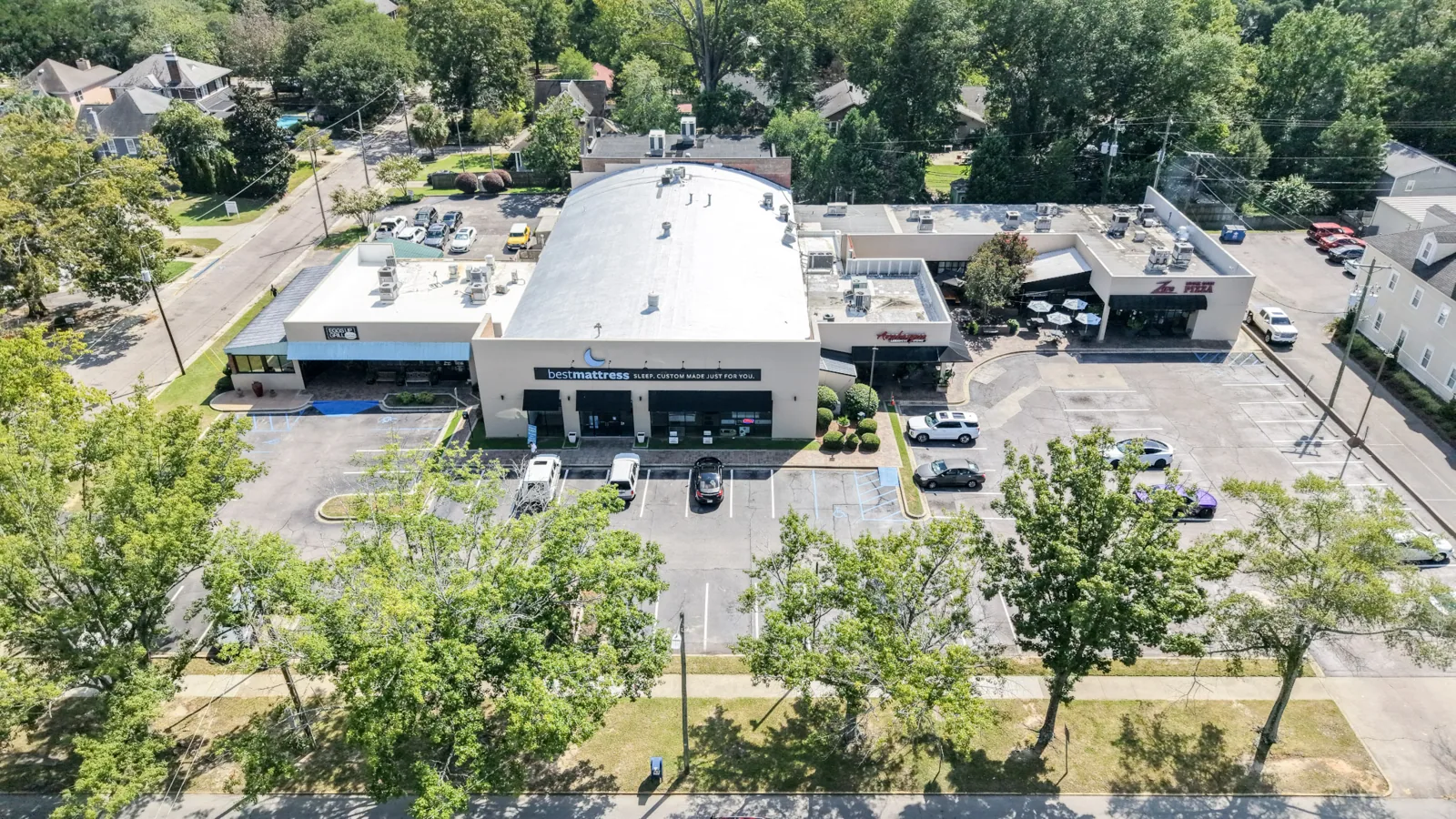
Bellis Fair Mall opened in 1988 as a one-story enclosed center, roughly 773,000 square feet, and big-box retail rings it at the I-5 and SR 539 interchange. That is one cluster. The Guide Meridian corridor, SR 539, links Bellingham to Lynden and the border. Pad sites carry a single small roof with heavy kitchen or fuel-island equipment.
Each pairs a roof with a lease structure. Large-format stores may control their own roofs. In-line tenants share a landlord's. We note who owns each roof and who maintains it before recommending anything. A chain that repairs a roof its landlord owes may pay twice. Big-box roofs and shopping center roofs share drains and expansion joints that deserve a joint review.
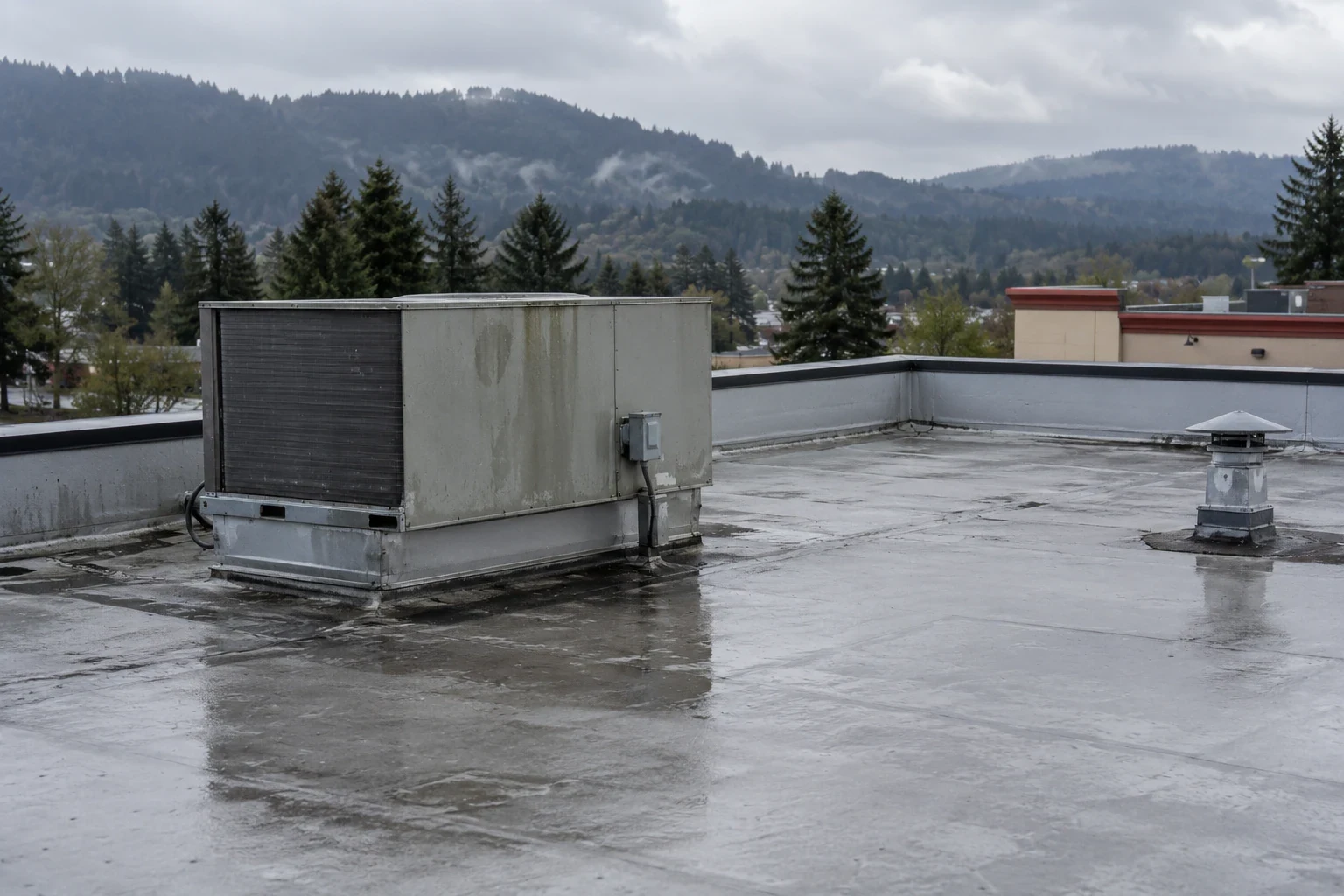
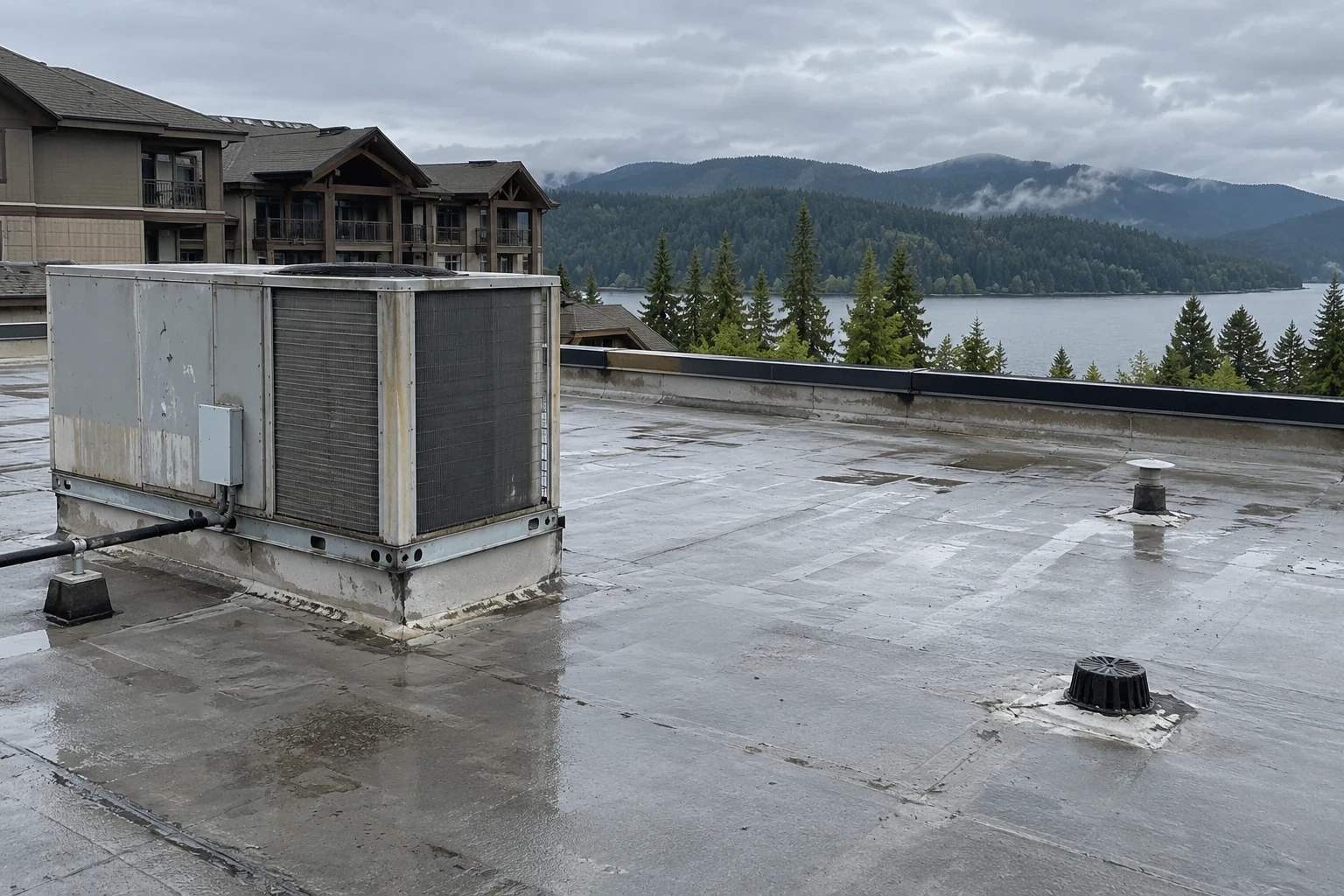
Rooftop equipment is the constant. Packaged units, make-up air, refrigeration condensers. The curbs and supports under that equipment are the usual leak points, so each gets inspected, counted and priced by unit.
Wind and the storefront edge
Retail roofs have tall parapets and signage. Both catch wind. In November 2024 easterly winds from a bomb cyclone did damage across Sudden Valley, and 22 storm incidents followed. Signs and parapet caps come loose first. We check sign supports, coping fastening and termination bars on every store visit.
Perimeter fastening goes on the bid by the foot. After a blow, the record separates storm damage from wear for the carrier. The chain's risk office gets dated photographs and a repair list in one file.
Snow is a small item here. Snow totals roughly 10 inches a year, mostly December through February. Even a light fall blocks scuppers, with melt ponding behind parapets, so each store's winter note lists the outlets to clear first.
One scorecard across every store
Chains need consistency, so every location gets the same grading scale, the same layout and the same cost drivers. The regional facilities manager reads the Bellingham store next to a store in another market. The multi-site roof programs we run group stores by condition, route and lease date, which lowers mobilization and keeps the capital plan even.
The Bellingham entry adds a local note on its long wet season, thin sun, moss growth, wind exposure and light snow. The report structure stays constant. A roof aging faster than the chain average shows up early, and a reserve adjustment follows before the roof forces it.
Brand standards matter. Some chains specify roof colors, membranes or approved details. We confirm those with the construction group before pricing, so a reroof does not conflict with a standard the store has to meet.
Reserve planning stays simple at store level. One line per roof. A grade. A year. A range. The regional manager can roll the stores up into a single capital request without chasing local notes.
When a leak lands on the sales floor
A drip over a display or a dining table is a customer issue and a safety issue. The emergency roof repair line answers at any hour. For chain accounts, the store contact list is entered in advance, so the call goes to a crew that knows the roof access, the alarm codes and the manager on duty.
The response includes dry-in, the cause as best it can be told and photographs the store can send to its risk office. Interior cleanup is the store's job or its restoration vendor's. We coordinate so the roof repair does not wait for it.
Afterward, the facilities manager gets a short closeout note. The repair. Its location on the roof plan. What the store should watch after the next rain. The same spot gets checked, not forgotten.
Commercial Roofing Questions
Can one agreement cover stores in several cities?
We can write a program for Whatcom County stores and extend it to others. Pricing and schedules are set store by store, with one grading scale throughout.
What does a landlord-owned roof mean for a tenant chain?
The lease decides who repairs and who pays. We document conditions and cost ranges for both sides so the landlord conversation starts with evidence.
How do you keep a restaurant open during a reroof?
Early-hour work, protected exhaust and make-up air equipment, and fume-producing steps timed away from meal periods. Kitchen and dining room stay operating.
What records does a chain's risk office usually want?
Dated photographs, a condition grade, repair history and warranty status. Our reports are laid out to meet that request without rework.
Is a white roof worth it on a retail store?
Bellingham's low sun keeps the energy gain small, so the case rests on membrane life and the code path. We check that path before recommending it.
Send the store list and the lease contacts
Send the addresses, roof ages and who owns the roof at each store. We will grade every store and schedule priced lines away from trading peaks.