Commercial Roofing in Barkley, Bellingham, WA
Commercial roof repair and replacement in Barkley, Bellingham, WA, for east-side retail, office and service buildings facing wind, rain and a short dry season.
Commercial Roofing in Barkley, Bellingham, WA
Commercial roof repair and replacement in Barkley, Bellingham, WA, for east-side retail, office and service buildings facing wind, rain and a short dry season.
Service Areas
Barkley in Bellingham
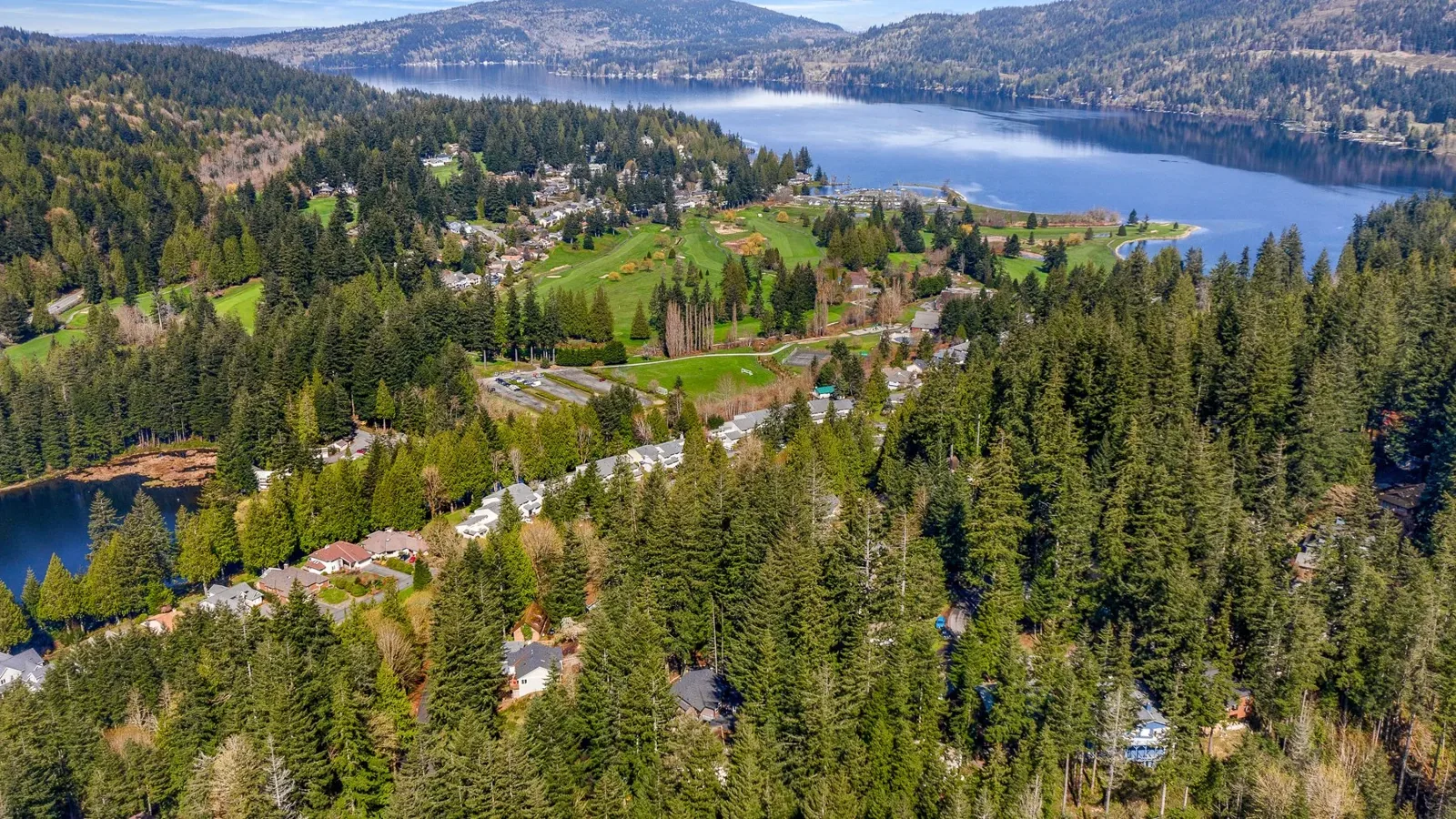
An overhang takes wind from underneath. A canopy over a storefront, a deep eave on a strip, a soffit at a loading bay: each catches air that has nowhere else to go. In Barkley, on the east side of Bellingham, WA, those edges are where we start. Barkley is a named city district near the I-5 and Lake Whatcom corridor, close to Sudden Valley, and the wind that reaches this side of town has a record.
Send the roof plan, the tenant list and your target window, and each canopy, cap and termination gets marked ahead of the bid close.
Overview
Barkley
What the east side wind has done
Bellingham sees strong windstorms. Gusts reached 67 mph in March 2016 and damaged commercial storefronts across the city. The November 2024 bomb cyclone's easterlies damaged at least 16 homes in nearby Sudden Valley and closed Lake Whatcom Boulevard for days.
Wind finds the same weak points on any roof, and we inspect the parts it lifts first: caps, copings, canopy returns, wall flashings and rooftop screens. Loose parts get fastened and logged, and the log shows which ones were repaired.
After a blow, a short walk finds what moved: a lifted cap, a shifted screen, a loose sign mount. A quick fix keeps a small problem from becoming a leak on the next rain. Crews respond at any hour for exactly that case, and the repair is logged against the roof map. Owners who keep a record of storm repairs also have a clean file when an adjuster asks what changed.
Rooftop equipment adds its own risk. A unit that is not strapped or curbed well can shift in a gust. We check the curb, the tie-downs and the flashing around each one, and we mark any that need the mechanical contractor.
Canopies, eaves and soffits
A canopy is a small roof with a big exposure. It faces the street, it takes splash and it is the first thing a customer sees. Leaks there stain a storefront and drip on a doorway. We flash canopies as their own item, test them with water and check how they tie to the wall.
Eaves and soffits need a different look. Wind lifts the underside, and a loose soffit panel lets rain and air into the roof assembly. We check fasteners, joints and trim, and we pull on suspect pieces by hand. A trim piece that moves under a hand will move in a gale. Fixing it is cheap before the storm, and it keeps small damage from growing into a membrane problem.
Drainage at canopies is easy to miss. A canopy with a blocked scupper holds water against the wall, and the wall stains and rots. We clear scuppers, check overflow height and test the run with water. Gutters and downspouts get the same test. A clear path for water does more for a small roof than almost any other line on the bid.
Reading a building before pricing it
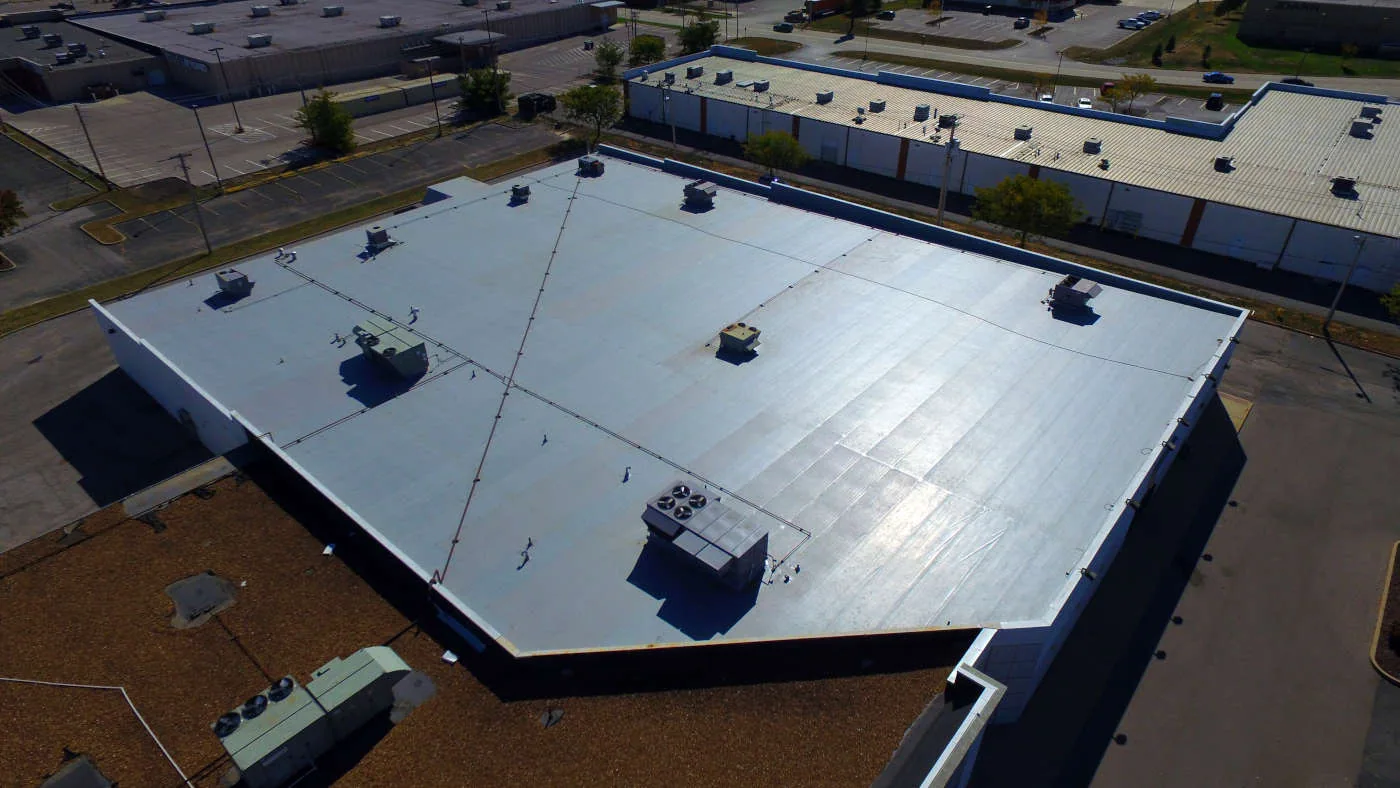
Whatever a building is, the method stays the same. On a first walk we identify the roof system, count layers, probe the seams and read the moisture. We note the age marks, the drain layout and every penetration. Retail, office and service buildings each present different rooftop equipment, and the equipment tells us where the flashing work sits.
The walk produces a roof map, photos and a condition note for each section. The owner sees which sections are sound and which are not. A commercial roof inspection comes first on any roof the owner does not already know.
Rooftop equipment tells the story. A cluster of units usually means a mechanical room below. A single fan may mean a restroom. A skylight band may mean a showroom. We trace each penetration to its source and rate its flashing. Dated photos of each unit's curb, tied to the roof map, show which equipment was original and which arrived with a later tenant. Units that were added later often sit on curbs that are too low, and low curbs are one of the most common leak points on any commercial roof.
What moves the price on an east-side roof
Edge work, layer count, insulation depth, access and phasing move the price. Membrane trails those items in cost. Insulation thickness comes from the energy code adopted March 15, 2024; thicker board means taller flashing at canopies, curbs and walls. A count at the first walk separates a recover from a tear-off, because the building code limits layers. A recover over dry insulation saves the haul-off and shortens the job. Readings and core samples settle it, and the owner reads the two options together. We walk the lot before we promise a crane day.
Deck condition stays unknown until the old roof comes off, so an allowance and a unit rate cover steel deck repair. The owner sees both numbers before award. Contingency has a line of its own, and the line is explained, not hidden.
Rain, low sun and the work window
Yearly rain in Bellingham comes to about 34.8 inches, heaviest in November and lightest in July. Sunshine totals only about 1,866 hours, so a damp deck dries slowly and moss grows in shade. The calendar is the main cost lever. Terminations and metal belong in the dry months, ahead of the fall rain.
When a leak cannot wait, we use small openings, same-day close and covered material. We tarp every open section at night. The bid carries the premium plainly, and the owner decides whether to pay it or wait for summer.
Spring is the second good window. Rain is easing, pollen and needle drop have not yet peaked, and the holidays are far away for any retail tenant. Booking a spring crew early leaves room to repair what winter wind moved.
Handover and neighbors
The owner joins us for the punch walk. We probe seams, pull caps and flood the drains. Open items get a name and a date, and the warranty packet follows the closed list. A roof map and a log of penetrations stay with the building, and a canopy map marks each return and soffit by condition for the next walk.
Barkley work is often planned with Sudden Valley nearby and with the Sehome and university district. A shopping center or an office building in the district follows the same steps.
A spring check each year re-probes the seams, clears the drains and retakes the photos, which gives any fall leak report a clean baseline to read against.
Commercial Roofing Questions
Why start with the canopy and the eaves?
They take wind from below and face the street. A loose piece there is a leak and a safety problem, and it costs little to fix before a storm.
What do you check on a building you have never seen?
The roof system, the layer count, seams, drains, moisture and every penetration. We photograph it all and record it in a roof map.
Can a recover go over the existing roof?
Yes, when core samples show dry insulation and the deck takes the added weight.
What time of year suits roof work on the east side?
The dry months, July especially. We aim to finish terminations and metal before the fall rain starts.
What happens when a leak cannot wait for summer?
We use small openings, same-day close and covered material, and we price the premium openly.
What does a post-storm walk look for?
Lifted caps, shifted screens, loose sign mounts and strained equipment curbs. We fix what is cheap now and log it for the file.
Send the drawings and the tenant list
Send the roof plan, the tenant list and your target dry-in window. We will price every canopy, cap and termination before the bid closes.