Commercial Roofing in Cherry Point, WA
Commercial roofing at Cherry Point, WA's industrial shoreline: long-life coatings and recovers, site entry rules, hot-work permits and outage-window scheduling.
Commercial Roofing in Cherry Point, WA
Commercial roofing at Cherry Point, WA's industrial shoreline: long-life coatings and recovers, site entry rules, hot-work permits and outage-window scheduling.
Service Areas
Cherry Point in Bellingham
A gate pass costs a morning. An orientation costs another. Cherry Point, WA is Whatcom County's heavy industrial shoreline, where the BP Cherry Point Refinery processes over 225,000 barrels of crude oil a day on about 3,300 acres. A roof on that kind of site is bid like any roof and run like a permit. Entry, hot work and shutdown windows set the number before the membrane does.
In 2021 Whatcom County banned new refineries and shipping terminals at Cherry Point. In December 2023 BP bought 1,100 acres nearby as a buffer. With no new refineries or shipping terminals allowed, the buildings already standing are the ones that matter. That puts the weight on maintenance, coating and recover work that stretches a roof's life. We write bids with that in mind.
Overview
Cherry Point
Long life is the goal
When a site cannot add new buildings, the old ones carry the load. A roof here is not a three-year question. It is a thirty-year question with a repair history behind it.
So we start with the history. Original build-up. Layers of recover. Coating. Patches. A core cut shows what sits under the surface, and a moisture scan shows where the board is damp. We then rank each roof section by what it will cost to keep it dry for another decade. A section with dry board and a sound sheet earns a coating. A section with saturated board needs a tear-off. The rank goes on the bid so the owner can plan spending year by year.
A preventive maintenance visit each fall clears drains, tightens edge metal and photographs every curb. It is the cheapest line on the bid and the one that saves the most.
Drainage is the second thing a long-life plan protects. A roof that holds water for a week every winter will not make thirty years. We check slope, drain bowls and scupper heights, and we offer tapered insulation as an alternate where the field ponds. The owner sees the cost of better drainage next to the cost of a patch that will be needed again.
Coat before it fails
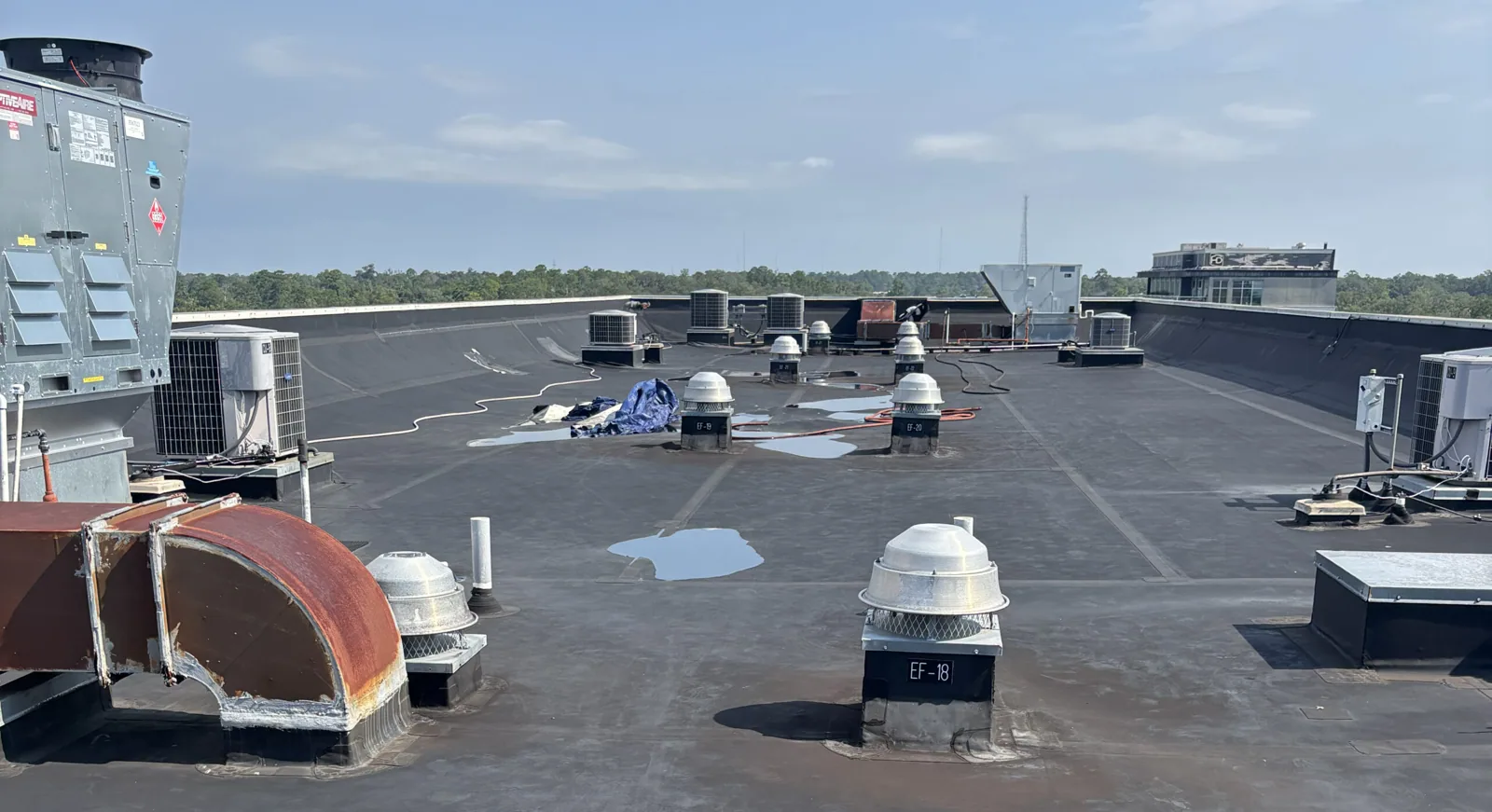
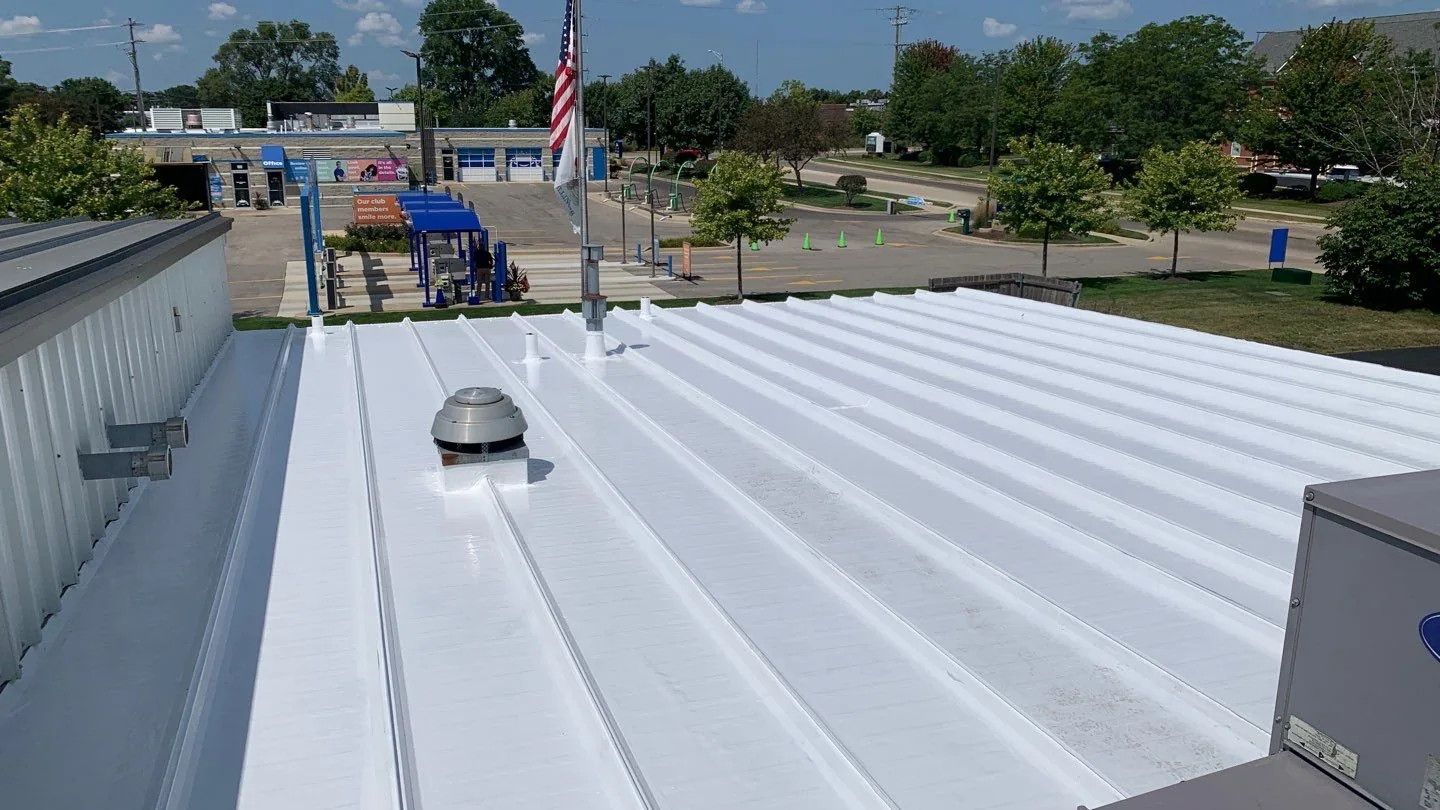
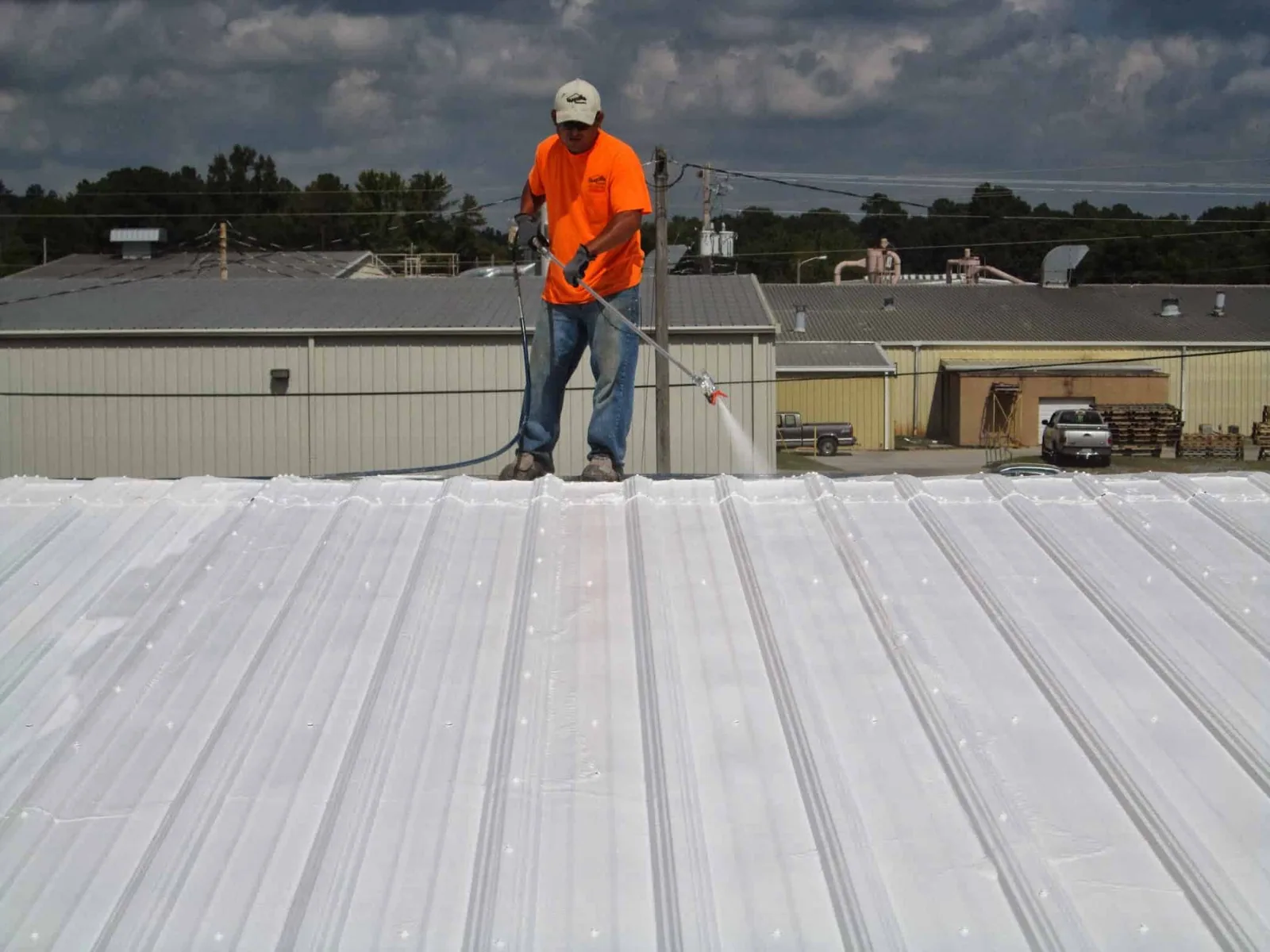
A coating extends a good roof. It does not rescue a bad one. A roof coating restoration needs a clean, dry surface, sound seams and a cure window. Cure windows are short in a market with only about 1,866 sunlit hours a year, and July is the one reliably dry month, so most days are not coating days.
A silicone coating tolerates ponding and cures in cool, damp air better than most. We still plan the application for summer. We probe the surface for adhesion before we commit, and we price a test patch. If the patch fails, the bid shifts to recover or replacement.
Primer and surface prep carry most of the cost. Pressure washing, repair of laps and treatment of rust or stains all come before the first coat. We list prep as a line apart from the coating. A cheap coat over poor prep peels, and the owner pays twice.
Seam and flashing repair come first. Every open lap and every cracked boot gets fixed before the coating goes on. A coating bridges small gaps. It does not close a split.
Site entry is a bid line
Sites on this shoreline control who comes in. Orientation. Badging. Vehicle checks. Escorts. Tool inventories. Each new worker may need a half day before stepping on a roof. A late badge can idle a crew.
We ask five questions in the bid phase. Who runs orientation? How long does clearance take? Where do trucks stage? Who escorts? What areas are restricted? The answers set the working days. We keep a stable crew to avoid repeat orientations, and we list the entry hours as a line. The general contractor or plant owner can then compare them against the contract duration.
A controlled site is priced by its rules. The rules are knowable before the contract, and they belong on the bid.
Hot work and the permit clock
Process areas control ignition. Open flame needs a permit and a fire watch. A hot-air welder needs a permit. Even grinding can raise a question. We price flame-free systems: adhered or mechanically attached sheets and coatings applied by roller or spray.
The permit clock matters. A permit may last a shift. It may need renewal each morning. Gas checks may come first. A crew that waits for a permit loses an hour. We include the permit hours in the schedule and name them on the bid. If the site's schedule moves, the standby hours show up as a line the owner already agreed to.
Outage windows set the pace
Industrial sites plan outages for maintenance. A roof job near a unit may only be allowed during one. That makes the window short and the pressure high. We plan for it by staging materials early, pre-cutting metal and rehearsing the sequence. The crew arrives with the drawings marked and the first section ready to start.
Weather adds risk. For reference, Bellingham takes about 34.8 inches of rain a year, and a window that lands in November meets its wettest month. We carry standby crew and tarp materials, and we tell the owner which sections can close the same day and which cannot.
Communication matters in a tight window. We agree a daily check-in with the site contact, send the day's plan the night before and report each section's status at day's end. If a section slips, the site hears about it the same day.
Drains and containment
Roof runoff on an industrial site may need to go somewhere specific. Some sites route storm drains to containment or treatment. We ask where each downspout discharges before we change anything. A new scupper or a moved drain that sends water to the wrong place becomes a compliance problem, and nobody wants to explain.
We keep the existing drain layout wherever possible. If a drain must move, the engineer approves the change and the bid shows the cost. Clearing debris from sumps and gutters on a schedule keeps the system working. A manufacturing owner with several buildings can set one visit for all of them.
Wind and the bay
Bellingham's 67 mph gusts of March 2016 and the easterly winds of a November 2024 bomb cyclone, which damaged at least 16 Sudden Valley homes, show what an exposed shoreline can face. Blaine, up the coast, sees about 42 inches of precipitation a year and salt air on its waterfront. A shoreline industrial site faces wind, so we check any metal for corrosion. Every bid carries perimeter fastening, and edge metal gets its own line. A cap that lifts lets wind under the sheet. For buildings reached from Ferndale or Blaine, the same checks apply.
Commercial Roofing Questions
Why does a ban on new refineries matter to a roof?
It keeps existing buildings in service for the long run. Roofs get maintained and restored instead of replaced by newer ones.
Can a coating be applied in a Bellingham winter?
Rarely. Low sun and damp air make cure windows short, so coating work waits for summer.
What does orientation add to the bid?
A half day per new worker, plus escort hours. Both appear as their own lines.
Is a permit needed for a hot-air welder?
On a process site, yes. The permit and the fire watch are priced as hours.
How do you plan around outage windows?
We stage material early, pre-cut metal and rehearse the sequence so the first section starts on day one.
Send the roof plan and the outage calendar
Send the roof plan, the site entry rules and the outage calendar. We will price every termination, entry day and metal line before the bid closes, so the owner decides what stays in.