Commercial Roofing in Anacortes, WA
Commercial roofing in Anacortes, WA: roofs near refining, boat shops and ferry-town buildings in salt air, with hardware and calendar priced by line.
Commercial Roofing in Anacortes, WA
Commercial roofing in Anacortes, WA: roofs near refining, boat shops and ferry-town buildings in salt air, with hardware and calendar priced by line.
Service Areas
Anacortes in Bellingham
Fasteners are the first bid line on a roof that sits in salt. Anacortes, WA had 17,637 residents in 2020, and refining is the area's largest industry, with the Marathon Anacortes and Shell Puget Sound refineries nearby. Washington State Ferries serve the San Juan Islands from Anacortes, and boatbuilding is part of the base. Industrial work, marine work and salt air all meet on one roof list.
A commercial roof beside refining, boat shops and a working waterfront has needs of its own, and we price the hardware, the chemistry and the calendar as visible lines.
Overview
Anacortes
Roofs near refining
Refining draws a support economy: shops, warehouses, offices and service buildings. Roofs on industrial buildings in a refining area see exhaust, airborne residue and sometimes chemical vapor. Those exposures shorten the life of sheets that cannot take them.
On a first walk we look for staining, softened surfaces and swollen seams. We ask what vents onto the roof. Where oil, solvent or fume exposure is likely, PVC and KEE membranes resist better than rubber or standard thermoplastic.
Fire rules apply too. Hot work near a process area needs permits and a fire watch, and some sites ban open flame. A cold-applied or welded system avoids the torch. We confirm the site's rules before choosing the install method.
Records matter on industrial roofs. Safety plans, hot work permits and contractor orientation are normal. A crew arriving without the paperwork loses the first day. We ask for the site's requirements when the walk is booked and carry the orientation time on the schedule.
Roof drains on an industrial building may tie into a stormwater system with its own rules. We confirm what can be flushed, what must be contained and who signs off. A drain that sends cleaning water to the wrong place is a problem at least as large as a leak.
Boat shops and big doors
Boatbuilding needs large, open buildings. Wide spans, tall walls and big doors mean long roof runs and high wall flashings. A shop roof is often metal or a single-ply sheet over a clear-span deck.
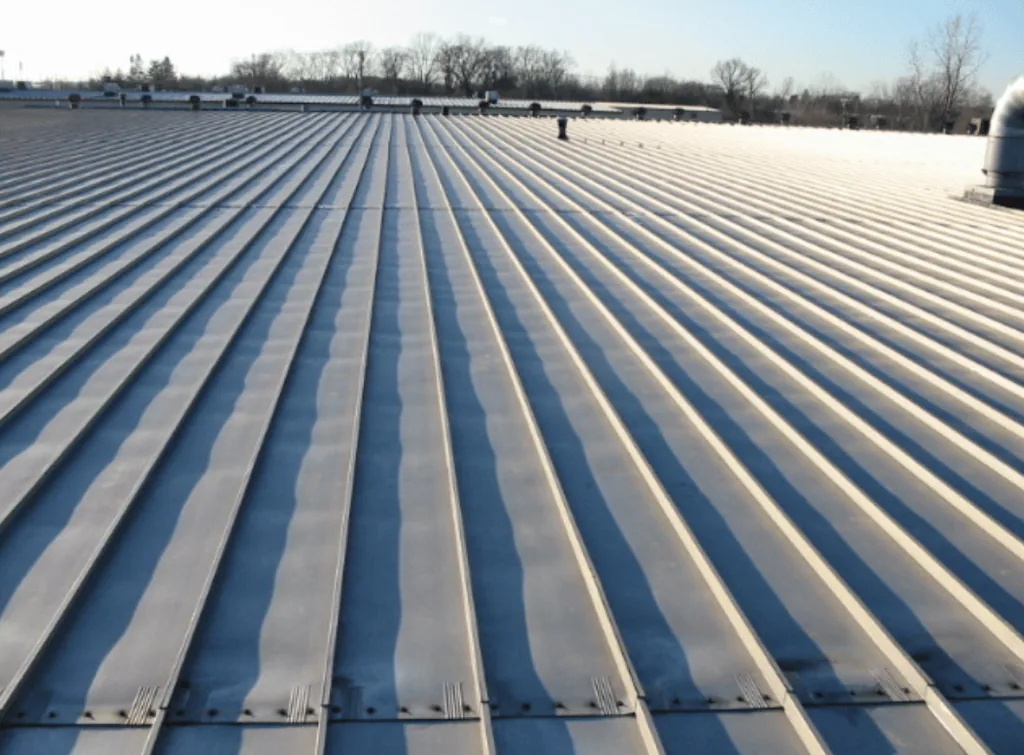
Metal roofs of that type show fastener backout, rust at laps and condensation. Interior humidity in any large shop can condense on the underside of a cold metal panel and look like a leak. We check the underside before we blame the exterior, and we recommend insulation or ventilation changes where condensation is the cause.
Where panels have aged, a metal roof retrofit or a coating restores the roof without a tear-off. Sound panels take a coating after fasteners are replaced and laps are sealed.
Wide doors change wall flashing. A tall door opening leaves a long header where the wall meets the roof, and that joint sees wind and rain. We check the sealant, the flashing laps and the fastener heads along the header. A door that racks in wind can open a gap that was tight when new.
Skylights and ridge vents appear on many shop roofs. Each one is a penetration with a curb or a flange. Cracked sealant at a skylight is the most common small leak on a metal shop roof. We reseal, replace gaskets and flag any glazing that has clouded or cracked.
Salt air and hardware
Salt air attacks fasteners, edge metal and cut panel ends. A plated screw can rust through in a few seasons on a waterfront roof. A stainless or coated one lasts. The extra cost per fastener is small against a roof that loses its hold.
Edge metal needs a coating or a stainless grade. Aluminum holds up better than steel in salt air but costs more. Gutters, downspouts and straps follow the same rule.
Bellingham's Marine Drive waterfront shows what salt does to a roof, and the same logic applies on the Anacortes waterfront. We list hardware as its own line. For a waterfront roof the choice is visible, and the owner decides.
Washing helps. Salt that sits on a metal roof keeps working. A freshwater rinse once or twice a year clears it, especially at laps and cut edges. We include a wash on maintenance visits for waterfront roofs and record the surface before and after.
Coatings protect aging metal. A well-prepared coating over sound panels seals laps and fasteners and slows rust. The prep is the work: wire brushing, rust treatment, primer and fabric at seams. Skipped prep leads to peeling within a season.
Ferry-town buildings
A ferry terminal town runs on schedules and traffic. Roof work near ferry traffic needs staging that does not block lanes or walkways. A crane day near a terminal approach needs a plan and sometimes a permit.
Buildings open to the public keep hours. One near the water cannot close for days. We use strip-by-strip work, seal each strip the same day and schedule loud work outside business hours when possible.
An occupied building reroof follows the same sequence anywhere. The building stays open, and the roof stays dry.
Parking and pedestrians share the ground below. A roof job above a walkway needs overhead protection and a catch fence. We set barriers, post signs and keep a spotter at the entrance when material moves. A dropped tool is never acceptable, and the plan assumes it could happen.
Weather and the calendar
For reference, Bellingham takes about 34.8 inches of rain a year under roughly 1,866 hours of sun. Those are the market city's numbers, and Anacortes has its own weather, so we plan with float.
Installs belong in summer. Wind is the other test. Bellingham saw 67 mph gusts in March 2016, and Sudden Valley took the easterlies of a bomb cyclone in November 2024. Waterfront roofs face open air, and edges catch wind first. We fasten edge metal at close spacing and test it by hand.
Moss and algae follow damp, shaded areas. We clean, treat and check the surface underneath. A maintenance program keeps drains clear and edges tight between big jobs.
Wet decks stop adhesives and welds. Dew on a metal deck can hide for hours after sunrise. We read the surface with a meter before starting and move to prep or flashing tasks if the deck is damp. Field membrane waits for a dry surface.
What drives the number
The base price follows roof system and condition. Salt hardware, membrane chemistry and staging access add lines. A July finish costs less than an October fight, so the calendar moves the number too.
Neighboring Skagit County cities share the I-5 and SR 20 network. Burlington and Mount Vernon are examples. We group work along the route when several sites are in play, and a multi-site program makes that grouping standing.
Commercial Roofing Questions
Which membrane resists industrial exhaust best?
PVC and KEE resist oils and many chemicals better than rubber or plain thermoplastic. We ask what vents onto the roof and choose from there.
Why do metal shop roofs seem to leak with no rain?
Interior humidity condenses on the underside of cold metal and drips. It looks like a leak. We check the underside, then the exterior, and fix the cause.
What fasteners suit a waterfront roof?
Stainless steel or marine-coated hardware. Plated screws rust through quickly. We specify by exposure and show the price difference.
Can torch work happen near a refinery?
Often not. Hot work needs permits and a fire watch, and some sites ban flame. We offer cold-applied and welded options and confirm site rules first.
How do you work near ferry traffic?
With a staging plan that keeps lanes and walkways clear. Cranes and lifts are booked early, and heavy lifts are timed to low-traffic hours.
Send the roof plan and the exhaust list
Send the roof plan, a list of what vents onto the roof and your target window. We will price the roof work, the hardware and the staging as separate lines before the bid closes.