Commercial Roofing on the Whatcom Waterway Waterfront, Bellingham, WA
Roof repair and replacement along the Whatcom Waterway industrial waterfront in Bellingham, WA, for bulk-cargo buildings with dust, salt and tight work windows.
Commercial Roofing on the Whatcom Waterway Waterfront, Bellingham, WA
Roof repair and replacement along the Whatcom Waterway industrial waterfront in Bellingham, WA, for bulk-cargo buildings with dust, salt and tight work windows.
Service Areas
Whatcom Waterway Waterfront in Bellingham
Scrap metal and quarry rock make dust, and dust makes a roof gritty. Grit wears a membrane, packs a drain and hides a seam. Along the Whatcom Waterway waterfront in Bellingham, WA, where the Port runs its shipping terminal, a roof job starts with a broom and a camera, then moves to the cut list. The cleanup line belongs on the bid from the first page. Send us the drawings, the yard access plan and the target dry-in window. We will price each termination, metal line and lift before the bid closes.
Overview
Whatcom Waterway Waterfront
A waterfront that has worked for a century
The Port's terminal on the Whatcom Creek Waterway traces back to its first ferry landing in 1923, and it handles rock for Columbia River jetty work and scrap metal exports. The waterfront around it was an industrial center for over a century, and a Georgia-Pacific pulp mill ran there until 2001.
That history tells us the neighborhood has seen many generations of building. It does not tell us the age or roof type of any one structure. Each building gets identified on a walk: the deck, the layers, the membrane and the fastening. Some roofs may have been recovered more than once. Others may be newer replacements. The roof file records the answer so the owner is never guessing.
Redevelopment of the former mill site next door means construction traffic, dust and new neighbors. A roof near an active building site picks up debris in drains and grit on the surface, and it may share a street with cranes. We coordinate lifts with the general contractor on the site and keep our own staging away from theirs.
Dust, grit and drains
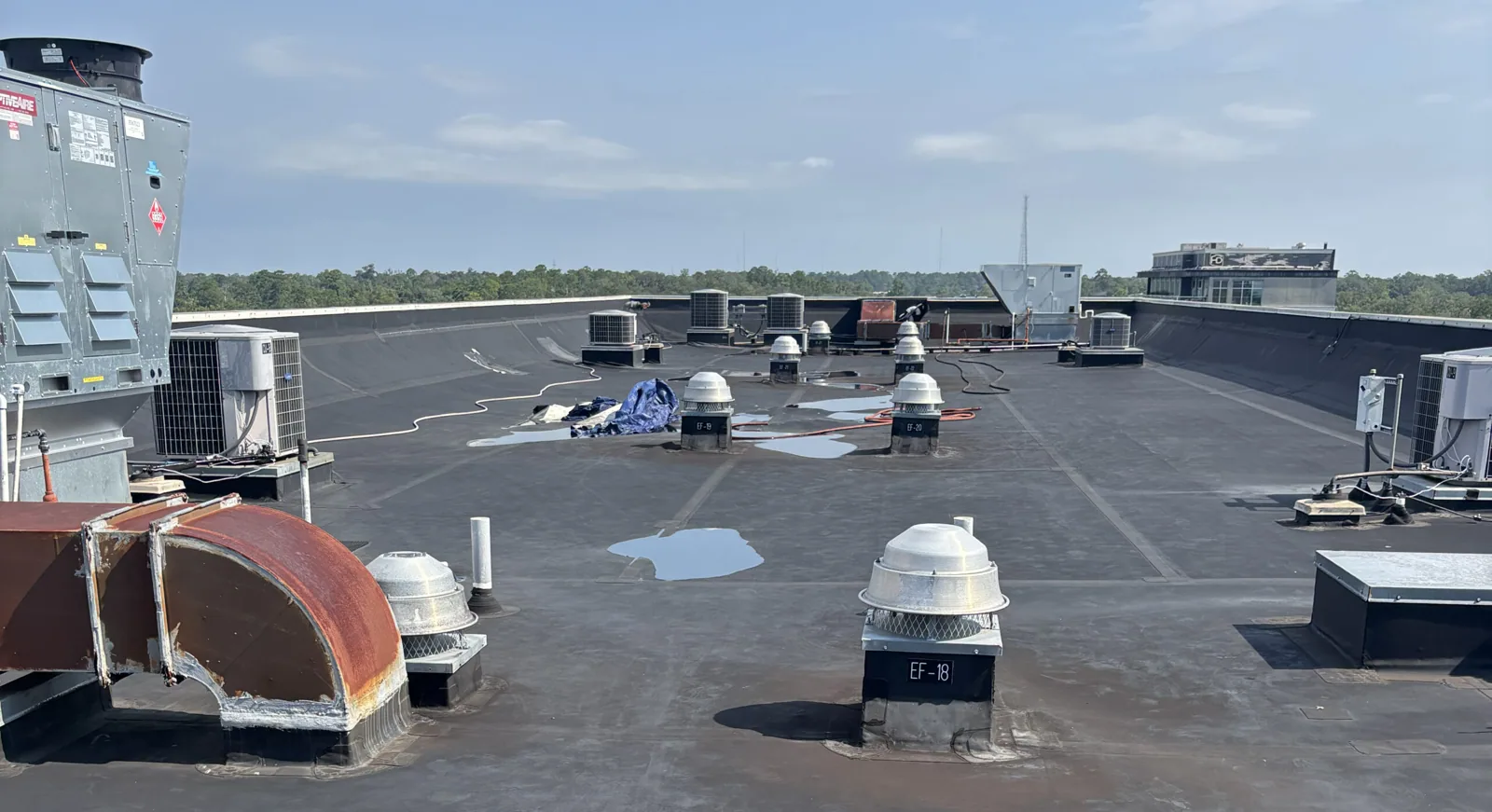
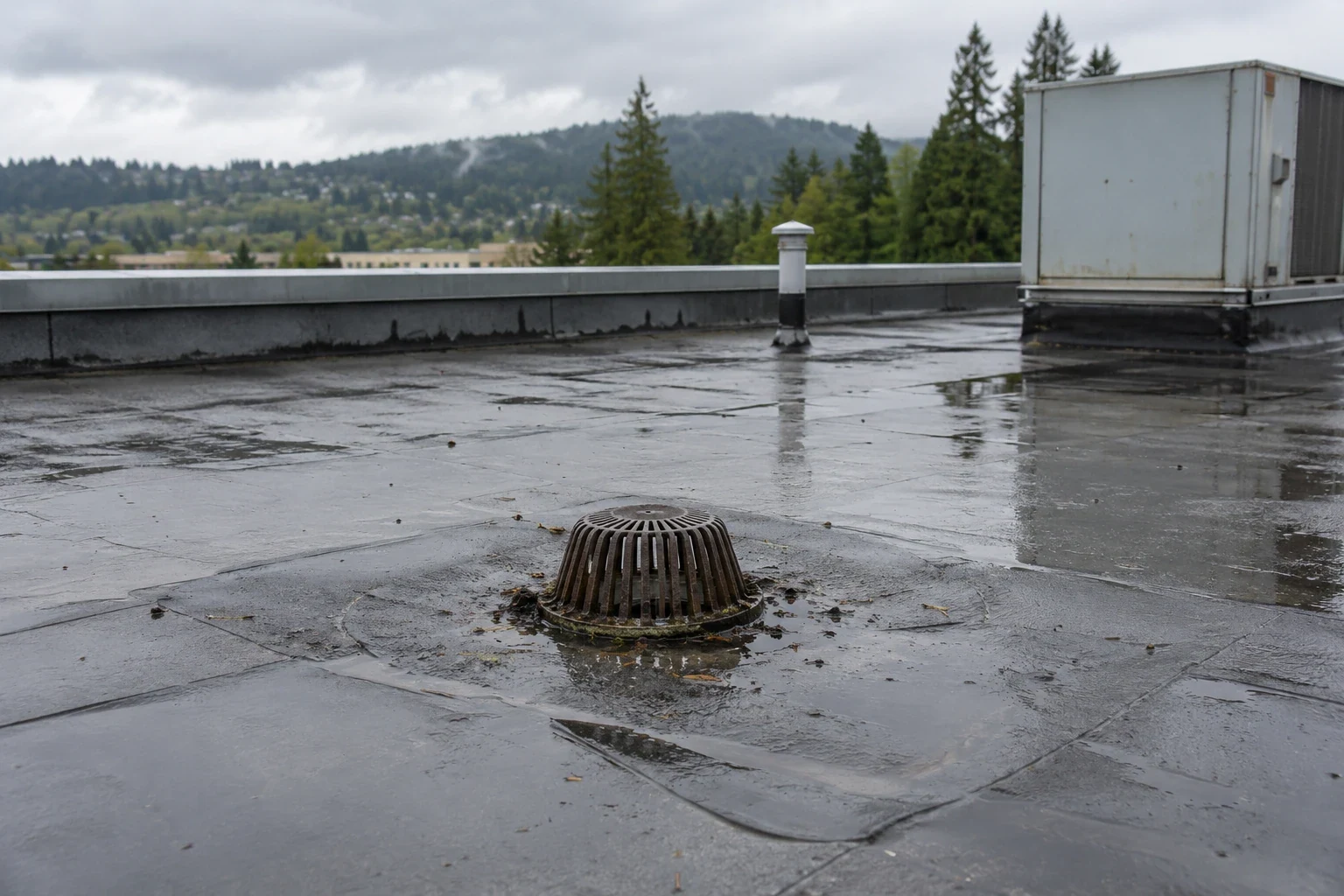
Bulk cargo handling puts fine material in the air. Wind can carry it onto nearby roofs, where it settles in low spots and packs around drains. A strainer full of grit passes no water. A roof drain fed by a membrane covered in rock dust clogs in a single season.
We sweep and vacuum before we inspect, since grit hides cracks. We pour water down each drain and watch the flow. We measure the depth of any pond and trace it to a cause. Then we set a cleaning interval under a preventive maintenance plan. Roofs near bulk handling may need a cleaning visit every season, and the schedule goes into the roof file. Our drain and scupper checks are the first thing to repeat.
Housekeeping is cheaper than repair. A crew that sweeps drains each season and clears scuppers after every dust event spares the membrane a standing pond. We hand the building engineer a one-page checklist: which drains, how often, and what to photograph. The checklist takes ten minutes a visit and heads off most leak calls.
Abrasion, salt and the sheet
Two things wear a membrane here: abrasion and salt. Abrasion comes from gritty foot traffic and wind-driven dust. Salt comes with the bay air. A thin sheet takes both badly, and a thicker one with a protective layer holds up better.
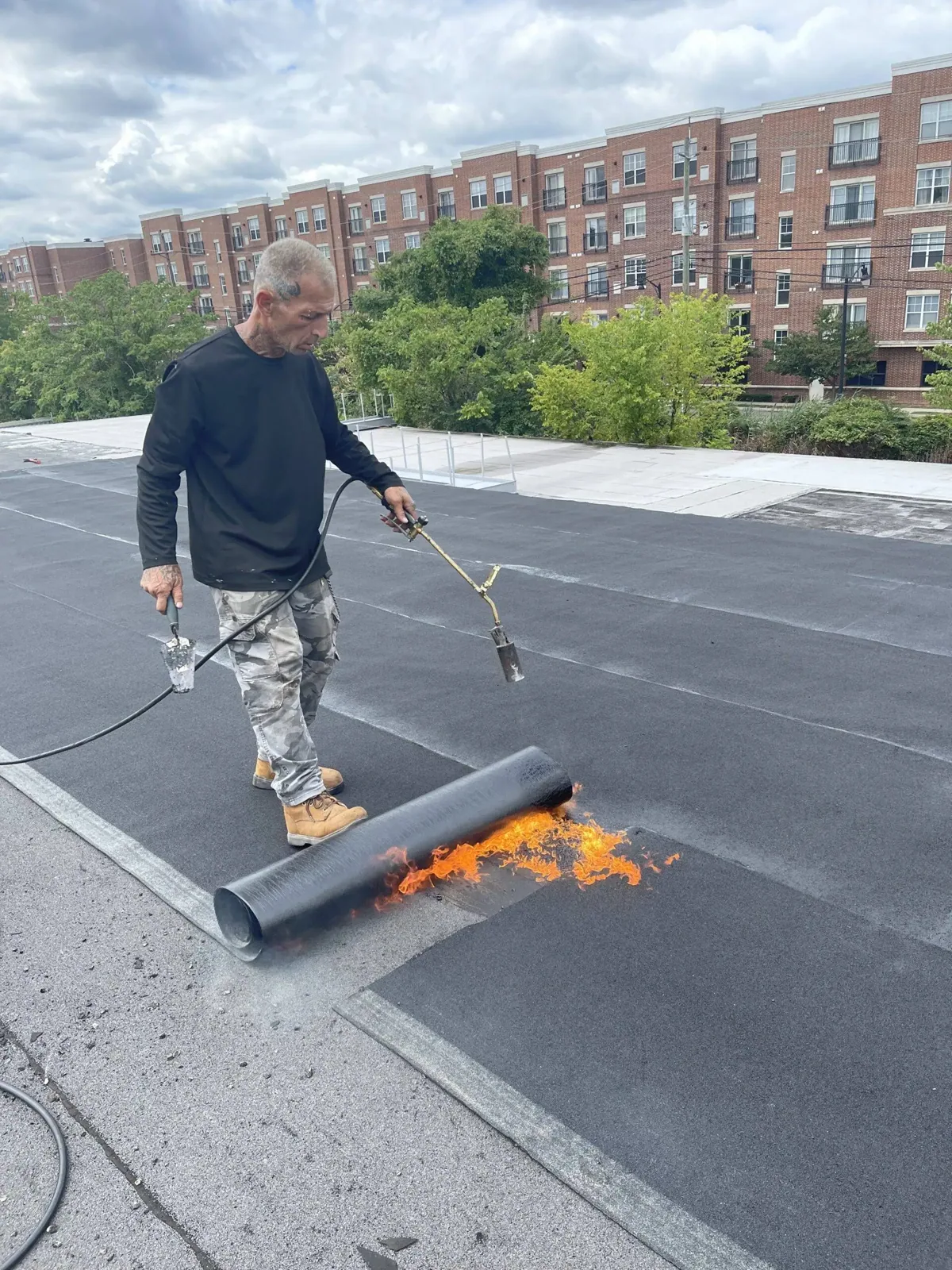
We discuss options in plain terms. A reinforced single-ply sheet with a walk pad at every access point wears slowly. A modified bitumen cap sheet with granules carries its own armor. A coating can renew a worn surface if the board beneath is dry. Each option goes on the bid with its life expectancy at this exposure, so the owner picks with the whole picture.
Rust is the other signal. Streaks below caps, plates and screens show where salt is working. We replace corroded hardware with a better grade, reseal the joint and log the date. A rust streak found in spring is a small job. The same streak found after a winter storm is a cap replacement.
Price drivers on an industrial waterfront
Cleanup, deck condition, hardware grade, insulation depth and access set the price. The sheet is the smaller line. A new assembly has to meet the energy code in force since March 15, 2024, which makes the insulation deeper and the flashings taller. Steel decks near salt rust from below, so the bid holds an allowance and a unit rate for deck repair, and the owner sees both before award. Access depends on the yard. Cranes need a clear pad, and active cargo areas may not offer one. We walk the yard at the busiest hour to see what really happens, then pick the lift plan.
Insurance paperwork often rides on roof condition near heavy industry. A dated photo set, moisture readings and a hardware log help an adjuster separate old wear from storm damage, and they shorten disputes over scope.
Timing against the weather and the ships
Bellingham sees roughly 34.8 inches of rain a year, wettest in November and driest in July, and only about 1,866 hours of sun. Decks near the water stay damp. Cargo schedules add a second calendar. A ship in port can close a lane or a yard for days.
We book roof days around both. A section opens only if we can close it before dark. When a ship schedule shifts, the roof schedule shifts with it. We keep float on the calendar and say how much. In the wettest weeks we use a wet-season method: small openings, same-day close, covered material. The premium shows plainly on the bid. The decision to open a section happens at dawn, not the night before.
Wind, edges and neighbors
Wind at 67 mph in March 2016 stripped stucco from a Bellingham storefront, and in November 2024 a bomb cyclone sent easterly wind across Sudden Valley. Industrial edges face wind with little shelter. Caps, copings and screens take the load.
We write the metal gauge and the fastener spacing into the scope, probe the seams and pull the caps before handover. Afterward the owner keeps a roof map, the photo set and a penetration log. The same method serves the neighboring Marine Drive waterfront and downtown Bellingham, where the former mill site is being redeveloped. A warehouse roof in the area follows the same file format.
Closeout is a short walk with the owner. We probe seams, tug caps, flood the drains and sign off each open item with a date. Warranty paperwork follows the closed list.
Commercial Roofing Questions
How often should drains be cleaned near bulk cargo?
Plan on a cleaning visit each season, and more often if dust is heavy. We set the interval after the first month of readings.
What sheet wears best against grit?
A reinforced sheet with walk pads at access points, or a cap sheet with granules. A coating can renew a worn surface when the board beneath is dry.
Does the old mill history change the roof plan?
It tells us the area has been built over many times. It does not tell us what is on any one roof, so each building gets identified on a walk.
What if a ship closes the yard on my roof day?
We keep float on the calendar and move the day. The bid states how much float it carries.
Why is deck repair carried as an allowance?
Steel decks near salt can rust from below, and the damage stays hidden until tear-off. A unit rate prices each repair that turns up.
What belongs on a building engineer's roof checklist?
Drain locations, cleaning dates, a photo of each strainer, rust spots at caps and plates, and any new penetrations. It takes ten minutes a visit.
Send the drawings and the yard access plan
Send the roof plan, the yard access plan and your target dry-in window. We will price every termination, metal line and lift before the bid closes.