Commercial Roofing in Bow and Edison, WA
Commercial roofing in Bow and Edison, WA: small-shop and restaurant roofs, low ground and wet air, planned so galleries and cafes keep their open days.
Commercial Roofing in Bow and Edison, WA
Commercial roofing in Bow and Edison, WA: small-shop and restaurant roofs, low ground and wet air, planned so galleries and cafes keep their open days.
Service Areas
Bow and Edison in Bellingham
A small shop roof is a small job with a large calendar problem. Edison is a Skagit County community of 240 residents at the 2020 census, set at about 10 feet of elevation, and it draws day-trip visitors to its galleries, shops, bakeries and farm-to-table restaurants. Bow is an unincorporated community of 203 residents and sits in the Burlington-Edison School District. When a building lives on weekend visitors, the roof crew works around the weekend.
We plan these jobs by the open days. The roof is repaired, restored or replaced in strips and short windows, and the shop below keeps its hours as much as the weather allows.
Overview
Bow and Edison
Small roofs, specific problems
Small commercial buildings carry the same details as big ones, in less room. A cafe roof has a kitchen exhaust, a vent stack and a rooftop unit, and each one is a penetration. A gallery roof may have a skylight, a parapet and a flat section that holds water.
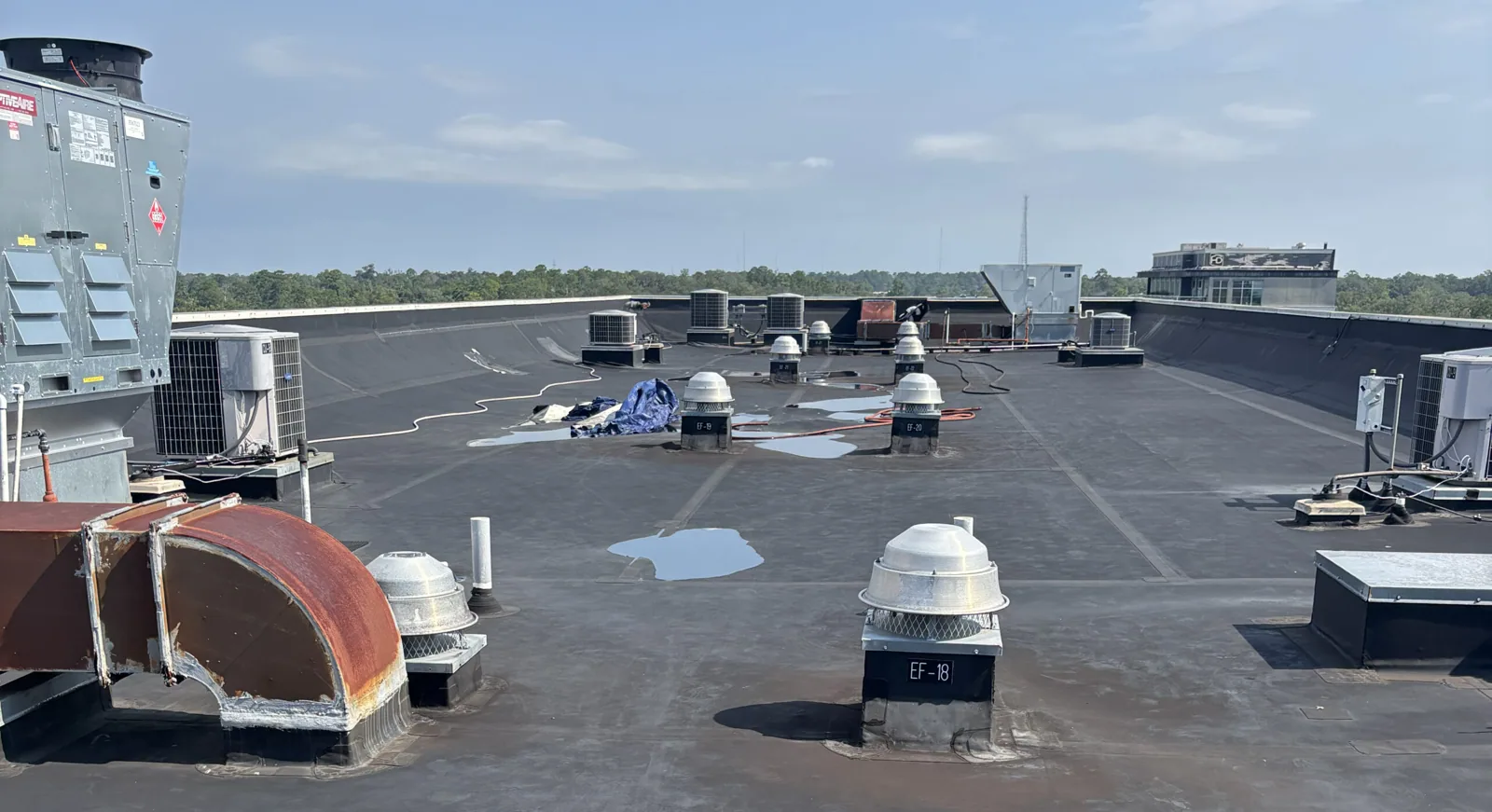
On a first walk we count what the roof carries. Penetrations, curbs, drains, skylights and edges each get a look. We probe seams and flashings, and we check the underside of the deck for stains. Where a roof is low-slope, we map ponding.
A short walk tells us what each building actually has, and a ranked list follows with a location, a scope and a cost on every item, so the owner picks what proceeds.
Skylights and glazed roof panels deserve their own check. Sealant dries and cracks, gaskets shrink and condensation runs inside the frame. A skylight leak looks like a roof leak, but the fix is at the curb or the glazing. We reseal, replace gaskets and flag any glass that has clouded.
Gutters and downspouts on small buildings often carry the whole roof's water through a single outlet. A blockage at one downspout floods the eave. We clear them, test the flow and strap them to the wall at close spacing.
Restaurant roofs and grease
A bakery or restaurant roof sees heat, steam and grease from exhaust. Fat softens some membranes and swells seams. Oven exhaust adds heat. The area around the fan is the worst spot, and it fails first.
We look for staining, soft membrane and open seams near exhaust. A walk pad beneath the fan protects the surface from grease and boots. Where exposure is heavy, a PVC sheet resists better than many alternatives, and a patch zone under the vent can solve the problem for less than a full replacement.
Exhaust fans need cleaning too. Grease buildup on the roof around the fan is a fire risk and a membrane risk. We tell the owner when the fan needs service and who should do it.
Heat is its own problem. An oven vent can warm a membrane above its comfort range, and repeated heat cycles harden some sheets. A reflective patch or a heat shield over the worst area reduces the stress. These are small items, and they protect the larger roof.
Low ground and damp air
At about 10 feet of elevation, Edison sits low. Moss and algae grow on flat and shaded surfaces, and condensation forms where warm interior air meets a cold deck.
We look for the signs: stained ceiling tiles, rusted fasteners from below, damp insulation at the eaves and moss lines on the membrane. Some stains are condensation, not leaks. We check the underside before we call a flashing bad.
Bellingham's low sunshine, about 1,866 hours a year, is the market city's number, and a valley town has its own light. Either way, a damp roof dries slowly. We clean growth, treat the surface and check the membrane beneath. A maintenance visit before the wet season finds what the damp will use.
Insulation can hold moisture for years once it gets wet. A scan on a clear evening, or a few cores, shows the extent. A small wet patch is cut out and replaced, and the membrane is patched over it. A large wet area points toward a recover or replacement, and the report shows the line.
Keeping the doors open
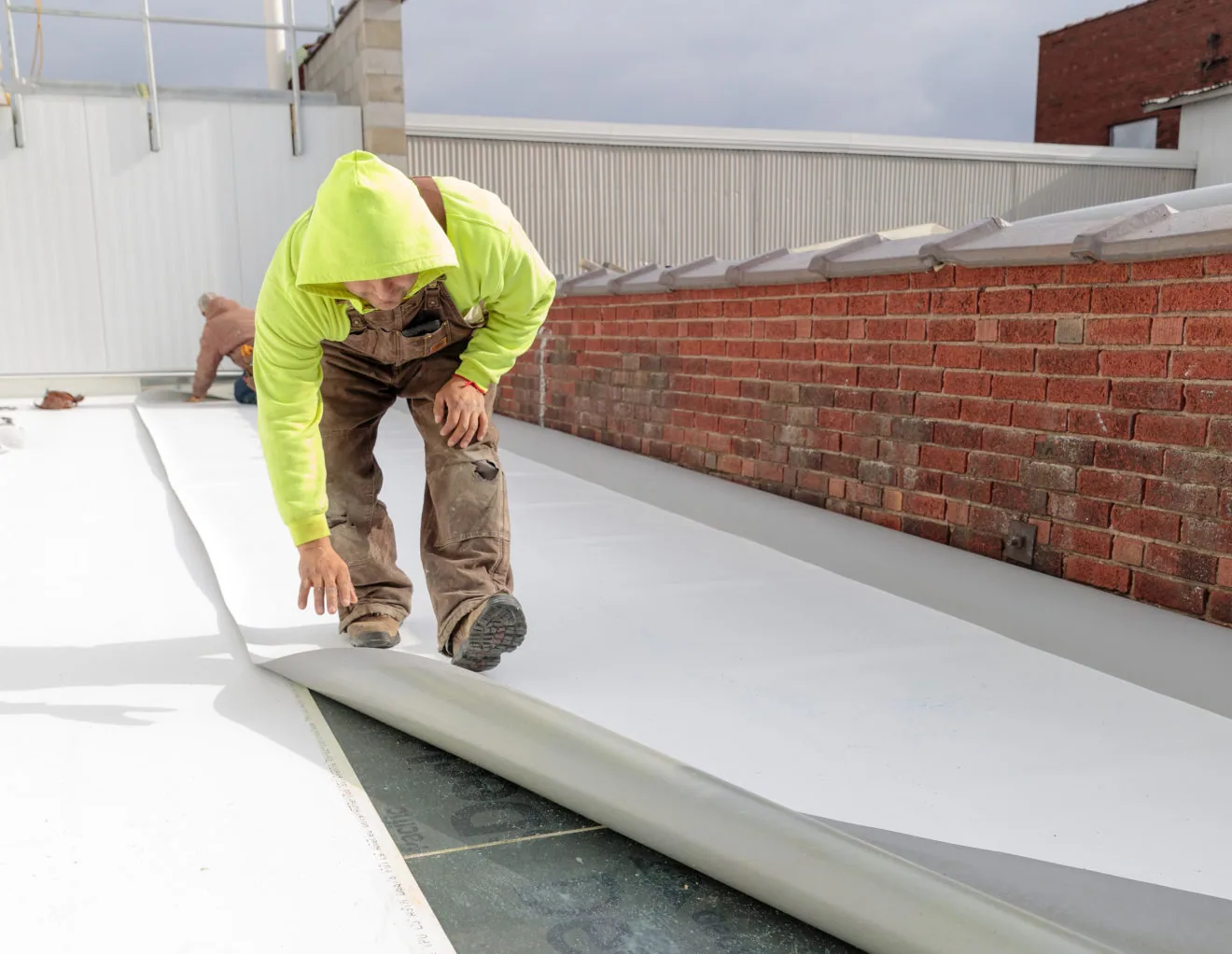
A shop that closes loses sales and goodwill. We use strip-by-strip work: open only what we can close that day, seal each strip before leaving and set loud tasks outside business hours when the owner allows. Walkways below are protected with barriers and overhead cover.
Staging is the next question. Small lots and narrow streets leave little room for a lift or a dumpster. We confirm the plan on the first walk and book equipment early. A delivery that blocks the entrance on a busy Saturday is a mistake we avoid by scheduling.
An occupied building reroof runs on the same sequence in any town: the doors stay open and the deck stays dry.
Neighbors on a small street feel a roof job too. Dust, noise and parked trucks reach the next door. We tell adjacent businesses the dates and hours in advance, keep the work site tidy and sweep at the end of each shift. A courtesy note takes ten minutes and prevents most complaints.
Weather and the calendar
Installs belong in summer, in the quiet weeks the owner picks between visitor peaks. Bellingham, the market city, sees about 34.8 inches of rain a year and its driest month is July. Skagit County keeps its own weather, so the schedule carries float. Wind tests edges. Bellingham's gust record is 67 mph from March 2016, and the November 2024 bomb cyclone sent easterlies into Sudden Valley. Low valley buildings sit open to the air, so edges are secured the moment they are laid and tied off at each shift's end.
Coastal-style hardware helps in damp air. Stainless or coated fasteners resist rust where plated ones do not, for a small extra cost. A replacement also reopens insulation depth under the 2021 energy code, which took hold in March 2024, and thicker insulation raises every curb and wall flashing. The estimate carries those heights as their own line.
What drives the number
The base price follows the roof system and its condition. Penetration count and exhaust work add lines, and so do walkway protection and staging. Skagit neighbors share the route: Burlington sits on I-5 and SR 20, and the wider Skagit Valley spreads along the same highways. Several sites can run as one route, and a multi-site program makes the grouping standing practice.
Commercial Roofing Questions
Can a cafe stay open during a roof repair?
Usually yes. We work in strips, seal each before leaving and set loud tasks outside hours. Walkways are protected, and a notice goes to the owner a few days ahead.
How do you handle grease near an exhaust fan?
With walk pads, a grease-resistant membrane patch or a PVC sheet where exposure is heavy. We also tell the owner when the fan needs cleaning.
How do you tell a leak from condensation?
We check the underside of the deck, the insulation and the interior humidity. Condensation follows cold surfaces and shows in dry weather. Leaks follow rain.
What if there is no room for a lift?
We plan hand-carry materials or a smaller lift, and we book space with the city if a street is involved. Staging is settled before the crew arrives.
When is the best season for a small roof job?
Summer, in the quiet weeks around visitor peaks. We pick the driest weeks, size strips to the forecast and keep temporary seals ready.
Send the roof photos and your busy dates
Send photos of the roof, the dates the building cannot close and any past leak notes. We will price the walk, the repairs and the protection as separate lines before the bid closes.